


El reciente brote del virus Oropouche, ocurrido en 2023, llamó la atención en Brasil y otros países de América Latina no solo por su magnitud (más de 30 mil casos registrados en el territorio brasileño), sino también por la primera muerte confirmada en el país causada por la enfermedad y por su rápida propagación a todos los estados, dejando de estar restringida a la región amazónica. Ante este escenario, a comienzos de año, la Organización Mundial de la Salud (OMS) también manifestó preocupación e hizo un llamado para acelerar el desarrollo de herramientas de prevención y control contra este patógeno, hasta entonces prácticamente desconocido.
¿Cómo es la enfermedad? #
“Estamos ante una enfermedad de una magnitud mucho mayor de la que se imaginaba, lo que requiere más atención. Estimamos que uno de cada mil diagnósticos de la enfermedad evoluciona hacia complicaciones graves, como enfermedades neurológicas, microcefalia, abortos y complicaciones hepáticas, lo que eleva su nivel de prioridad para la salud pública”, afirmó José Luiz Proença Módena, coordinador del Laboratorio de Estudios de Virus Emergentes (Leve) de la Universidad Estatal de Campinas y coautor de los estudios, que cuentan con apoyo de la FAPESP.
Financiación #
El trabajo también recibió financiamiento del Consejo Nacional de Desarrollo Científico y Tecnológico (CNPq, vinculado al Ministerio de Ciencia, Tecnología e Innovación de Brasil), del Instituto Todos pela Saúde, de los National Institutes of Health (NIH), de Estados Unidos, y de la institución filantrópica británica Wellcome Trust.
Manaos, epicentro de la crisis #
En Manaos, la mayor metrópolis de la región amazónica, se estima que 300 mil personas fueron infectadas entre 2023 y 2024, casi 260 veces más que los casos confirmados. Según los investigadores, la prevalencia de anticuerpos contra el virus pasó del 11,4 % en noviembre de 2023 al 25,7 % en noviembre de 2024, lo que indica una amplia propagación de la enfermedad.
Esta dinámica ayuda a explicar la propagación del virus a todos los estados brasileños y a los países vecinos, además de reforzar el escenario que motivó a la Organización Mundial de la Salud a emitir una alerta internacional.
En el caso de los pacientes de regiones remotas de la Amazonia, los investigadores destacan las dificultades propias de la dinámica y la logística de la región. “Los pacientes en regiones remotas de la Amazonia a menudo enfrentan tiempos de viaje de más de 24 horas para llegar a un establecimiento de salud. Esto significa que probablemente muchos casos no fueron diagnosticados, permitiendo que el virus circulara silenciosamente hasta alcanzar los límites de un gran centro urbano”, afirmó Souza.
Casi indetectable #
A partir de este seguimiento, los investigadores también identificaron que las personas infectadas en la década de 1980 aún eran capaces de neutralizar la variante viral reciente. “Esto sugiere una protección cruzada duradera, capaz de orientar futuras estrategias de vacunación”, explicó Souza.
Un virus de la selva #
Jején, mosquito pólvora, maruim #
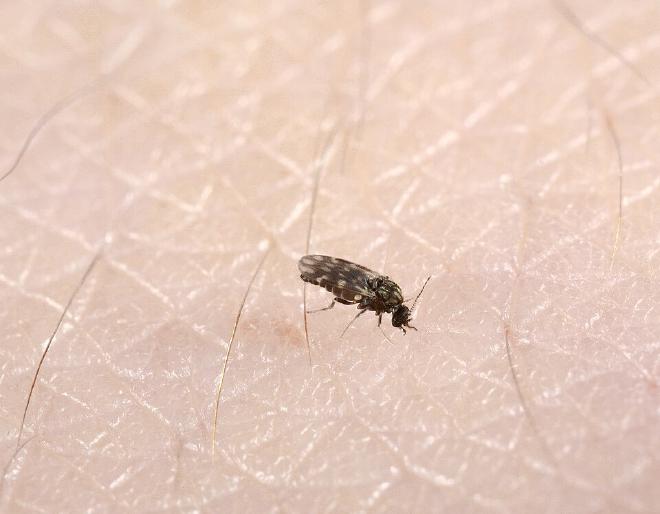
A diferencia de otras arbovirosis más conocidas, el virus es transmitido por el jején, mosquito pólvora o maruim (Culicoides paraensis), lo que hace que la incidencia de la enfermedad en áreas rurales sea 11 veces mayor que en las ciudades.
Suelos húmedos, materia orgánica, temperaturas elevadas y lluvias #
“Históricamente, esta enfermedad estaba muy vinculada a áreas con cultivos de banano y cacao, pero al estudiar la ecología del virus identificamos que la cuestión no es la fruta en sí, sino las condiciones ideales de suelos húmedos y con abundante materia orgánica. Las altas temperaturas y las lluvias también favorecen la propagación del maruim”, señaló el investigador.
Los autores destacaron que el carácter rural de la enfermedad influye en las estrategias de políticas públicas. “El combate contra la enfermedad se vuelve muy diferente al de otras arbovirosis transmitidas por mosquitos, que son más urbanas. Estrategias como la fumigación en plazas y calles asfaltadas probablemente tienen poca utilidad contra el Oropouche. El maruim no vive en los desagües de las viviendas, sino en la humedad de las áreas forestales y en la vegetación periférica de las ciudades”, explicó Souza.
Un difusor muy pequeño #
Otra característica importante del maruim es que es tres veces más pequeño que un mosquito común, un tamaño ideal para atravesar mosquiteros. Sin embargo, la razón detrás de esta agresiva reemergencia no radica únicamente en el clima, sino también en una nueva recombinación viral (reassortment).
En el estudio, los investigadores identificaron además la aparición de una nueva variante viral, resultado de un proceso de reorganización o reasortamiento genético que ocurre cuando dos virus diferentes infectan una misma célula. Esto aumentó la capacidad de replicación del virus y dificultó su neutralización por anticuerpos generados en infecciones previas, haciendo que el patógeno sea más apto para nuevas expansiones territoriales. (Los interesados pueden leer -en portugués- más sobre el tema en el sitio de la FAPESP)
“La reemergencia del Oropouche nos muestra que no podemos combatir todas las arbovirosis con la misma receta, porque el maruim no sigue las mismas reglas que el Aedes. Esto hace que la vigilancia actual contra el virus Oropouche sea insuficiente y subestime drásticamente la verdadera dimensión de la enfermedad”, afirmó Módena.
Más allá de los centros urbanos #
Para el investigador, la vigilancia debe ir más allá de las grandes ciudades. “Aunque parece existir una inmunidad de largo plazo para quienes ya fueron infectados, la velocidad con la que el virus se expandió por todos los estados brasileños demuestra que el sistema de salud necesita nuevos sistemas de detección, enfocados incluso en la vigilancia lejos de los grandes centros urbanos”, sostuvo.
Citas #
-
El artículo Ecological and demographic drivers of Oropouche virus transmission puede leerse en Nature Health. Article Published: 24 March 2026 Ecological and demographic drivers of Oropouche virus transmission. Autores: Xinyi Hua (华心怡), Laura W. Alexander, Ingra M. Claro, Yucai Shao, Ronaldo de Jesus, Shirlene T. S. de Lima, Paulo C. Ventura, Rodrigo B. Kato, Marco Ajelli, André B. B. Wilke, Marc A. Suchard, Nuno R. Faria, José Luiz Proenca-Modena, Laura B. Dickson, Ana I. Bento & William M. de Souza Nature Health volume 1, pages487–496 (2026)
-
El artículo Transmission dynamics of Oropouche virus in Latin America and the Caribbean está disponible en Nature Medicine. Autores: Erika R. Manuli, Xinyi Hua (华心怡), Gabriel C. Scachetti, Julia Forato, Ingra M. Claro, Geovana M. Pereira, Livia Sacchetto, Oscar Cortes-Azuero, Ana Carolina Bernardo, Cláudia F. Resende, Natália B. S. Bacarov, Ligia Capuani, Shirlene T. S. de Lima, Ronaldo de Jesus, Rodrigo B. Kato, Bárbara B. Salgado, Carolina M. L. Singh, Nadielle C. Pereira, Renato S. Reis, Sérgio R. L. Albuquerque, Richard Stanton, Vanderson S. Sampaio, Ana I. Bento, Marielton P. Cunha, Oliver Ratmann, Nuno R. Faria, Scott C. Weaver, Pritesh J. Lalwani, Henrik Salje, Allyson G. Costa, José Luiz Proenca-Modena, Ester C. Sabino & William M. de Souza
Contacto [Notaspampeanas](mailto: notaspampeanas@gmail.com)