


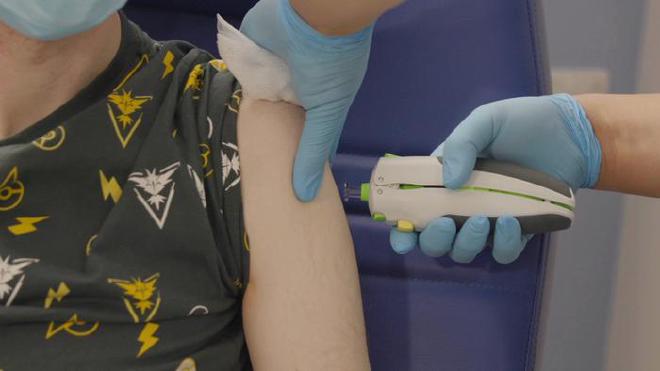
The trial, involving 39 healthy volunteers, tested a vaccine designed to provide protection against multiple Sarbeco coronaviruses - the large group of viruses that occur in nature including SARS-CoV-2, which caused the COVID pandemic.
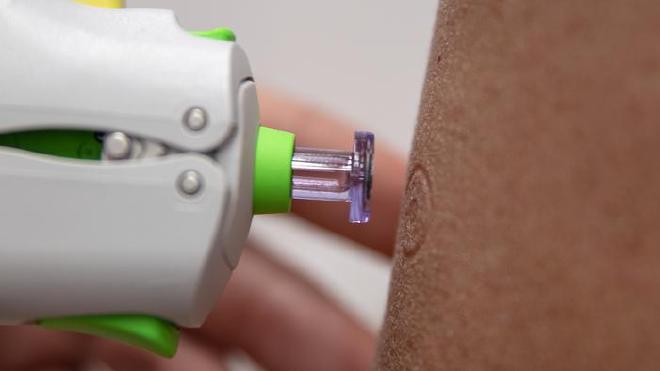
The trial proves the safety of an entirely new way of designing vaccines. The technology uses an AI-designed ‘super-antigen’ to provide lasting protection against a broad range of viruses - for example the Ebola group, or Sarbeco coronavirus group - even as they mutate.
Vaccines developed in this way could protect against future emerging virus threats. The technology also reduces the need for frequent reformulation, which is a fundamental limitation of current vaccines.
A first #
Participants took part in the trials at National Institute for Health and Care Research (NIHR) Clinical Research Facilities in Southampton and Cambridge. The study was sponsored by the University Hospital Southampton NHS Foundation Trust (UHSFT).
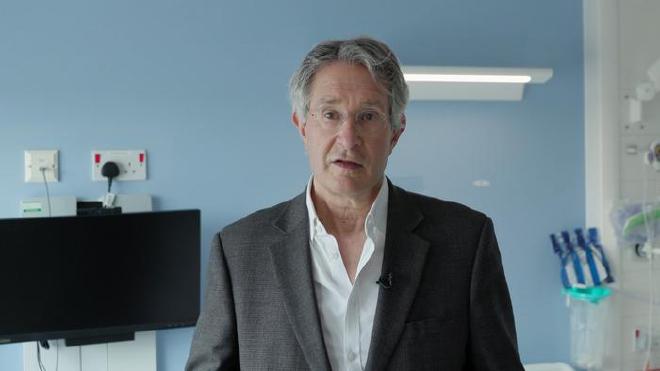
“We’ve overcome the problem of traditional vaccines, which have limited protection. It means we can escape the constant cycle of chasing the virus variants circulating in humans and updating the vaccines to try to catch up, like a dog chasing its tail”, he added.
How it works #
Current vaccines, such as the seasonal flu vaccine and existing Covid-19 vaccines, use antigens from specific virus strains or variants that have already been detected in humans. But since viruses are constantly mutating, by the time these traditional vaccines are manufactured and distributed, they have limited protection and must be updated annually in an effort to keep up.
To design the antigen for a universal coronavirus vaccine, the team used all the available genetic sequence data for Sarbeco coronaviruses logged by surveillance programmes around the world. Using machine learning, they then designed a super antigen containing the antigen features common to this whole group of viruses – including ones that haven’t emerged yet.
Human clinical trials #
The vaccine was given to volunteers between 18 and 50 years old at the NIHR Southampton Clinical Research Facility at UHSFT, and at the NIHR Cambridge Clinical research Facility at Addenbrookes Hospital, Cambridge.
Trial in animals #
A previous trial in animals - an important step before beginning human clinical trials - found that the vaccine provided a strong immune response against a range of coronaviruses.
The continuous pandemic threat #
“Viruses like Influenza, Coronaviruses and the Ebola group are evolving continuously and by the time vaccines are rolled out, they may be poorly matched - the current “reactive” vaccine system struggles to keep pace,” said Professor Saul Faust from the University of Southampton, the trial’s chief investigator.
“This new class of universal vaccines are future-proofed. They not only protect against many variants simultaneously, but potentially against related viruses that haven’t yet emerged and spilt over to humans", he added.*
“If we can develop and clinically advance this new class of vaccines before a virus outbreak begins, millions of lives could be saved, lockdowns avoided and the economy preserved”, he stated.*
A success #
Professor Marian Knight, Scientific Director for NIHR Infrastructure, said: “The remarkable success of this AI-designed ‘super-antigen’ trial marks a pivotal leap forward in our ability to deliver broad, lasting viral protection.”
She added: “This milestone was only made possible through partnerships between the life sciences sector and our world-class NIHR infrastructure in Cambridge and Southampton, whose Clinical Research Facilities provided the vital expertise and environment needed to safely fast-track this innovation, and bring it one big step closer to patients.”
Coronaviruses such as SARS-CoV-2 and related Sarbeco coronaviruses continue to pose a threat to public health. A wide range of these and other viruses continue to circulate in animals that could potentially jump to humans at any time – but it’s not possible to predict which one, or when.
Funding #
The research was primarily funded by Innovate UK. The DIOSynVax pipeline includes vaccine candidates for human seasonal Flu and the pandemic influenza threats, haemorrhagic fever viruses, and coronaviruses including SARS-CoV-2.
DIOSynVax - Digitally Immune Optimised Synthetic Vaccines - is a spin-out company from the University of Cambridge, established in 2017 with the support of Cambridge Enterprise, the University’s commercialisation arm. Jonathan Heeney is the Professor of Comparative Pathology at the University of Cambridge, and a Fellow at Darwin College.
Citation #
- The article A phase I, needle free, dose escalation clinical trial of pEVAC-PS, a candidate pan-a was published in Journal of Infection. Authors: Alasdair PS Munroa, Matteo Ferraric, Rebecca Kinsley, Daniel Egan, Sneha Vishwanath, Thomas Bower, Andrew Chan, Matthew Davies, Joanne Marie M. Del Rosario, Ron Moss, Yvanne Enever, Benedict Asbach, Ralf Wagner, Rachel Bousfield, Krishna Chatterjee, Victoria Cornelius, Saul N. Faust, Jonathan L. Heeney
Contact [Notaspampeanas](mailto: notaspampeanas@gmail.com)