


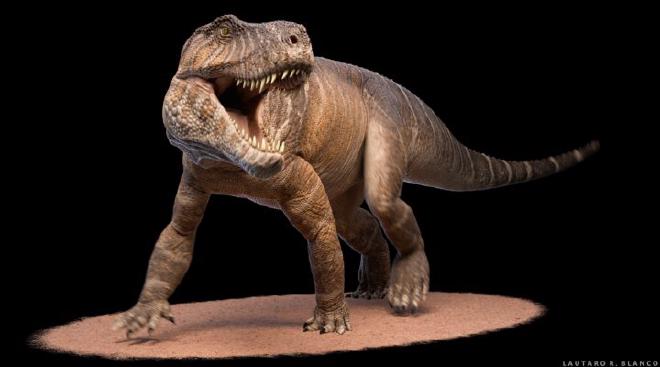
Durante el Triásico Medio-Tardío, unos 237 millones de años atrás, cuando todavía no existían los grandes dinosaurios carnívoros, los reptiles del grupo Paracrocodylomorpha –cuadrúpedos de entre 4 y 10 metros de largo–, parientes lejanos de los actuales cocodrilos, eran los mayores y más temibles depredadores. En un trabajo que fue publicado en la revista Papers in Palaeontology, un equipo de investigación del CONICET, integrado por expertos de La Plata, La Rioja y la Ciudad Autónoma de Buenos Aires, reporta el hallazgo de un nuevo género y especie de paracrocodilomorfo: Shakajlura riojanensis, es decir, “lagarto bendito de La Rioja”.
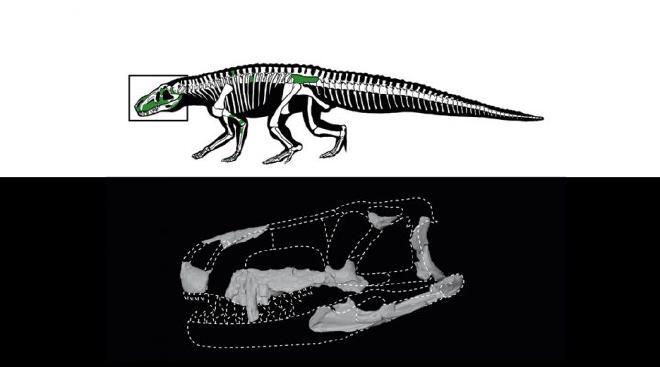
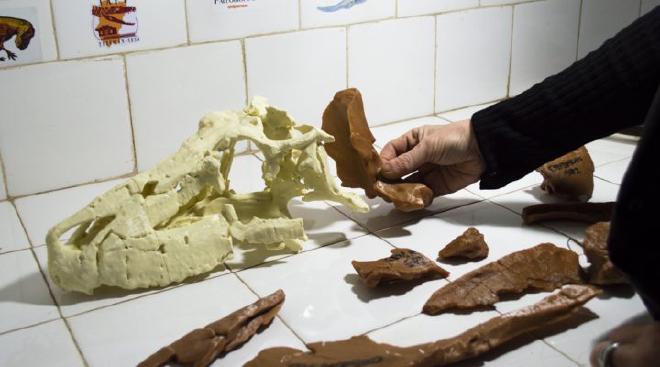
“El Triásico es un momento clave en la historia de la vida en la Tierra: comenzó luego de la Gran Mortandad, como se conoce a la extinción masiva más grande de la que se tenga registro –la del Pérmico superior, hace 252 millones de años– y es el primer período de la denominada ‘Edad de los reptiles’, es decir la Era Mesozoica. En ese sentido, los afloramientos de la Formación Chañares presentan un registro de interés mundial, porque incluyen ancestros de mamíferos, dinosaurios y cocodrilos, como también de plantas, hongos y artrópodos”, apuntó.
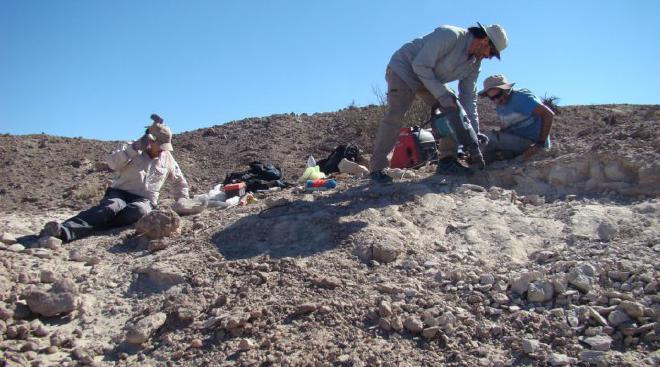
Formado en la Facultad de Ciencias Naturales y Museo de la Universidad Nacional de La Plata (FCNyM, UNLP), Cardillo destacó que “los Paracrocodylomorpha son importantes por varios motivos. Por un lado, nos cuentan sobre el origen de los cocodrilos, los únicos representantes del linaje que llegaron hasta la actualidad. Por otra parte, nos dan información sobre cómo eran esas faunas triásicas posteriores a la extinción pérmica. Además, son considerados las ‘figuritas difíciles’, porque se encontraron muy pocos ejemplares si comparamos con otros grupos de animales de la misma época, entonces cada vez que se descubre uno nuevo tiene un altísimo valor científico”.
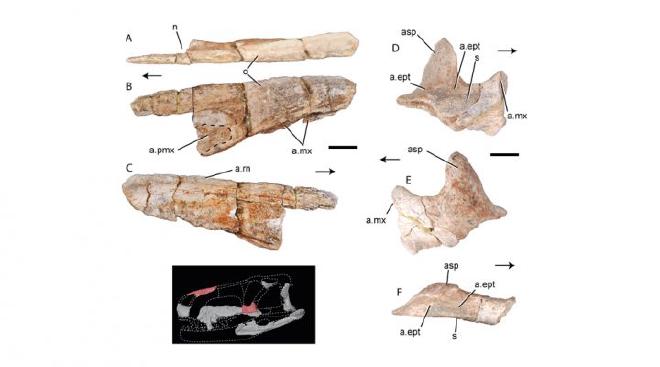
“Luperosuchus tiene una curvatura o proyección hacia arriba, como una montañita prominente sobre el hocico, a la altura de las fosas nasales, algo que no se ve en Shakaljura”, remarcó Desojo, y dejó caer una broma: “Una especie de nariz romana”. El nuevo ejemplar tiene los nasales bien rectos. “Por otro lado, hay un rasgo distintivo que los separa bien claramente en un hueso ubicado en la parte posterior de la órbita, que se denomina postorbital: mientras que en Luperosuchus tiene una protuberancia redondeada, en Shakajlura esta es más parecida a una barra alargada”, detalló.
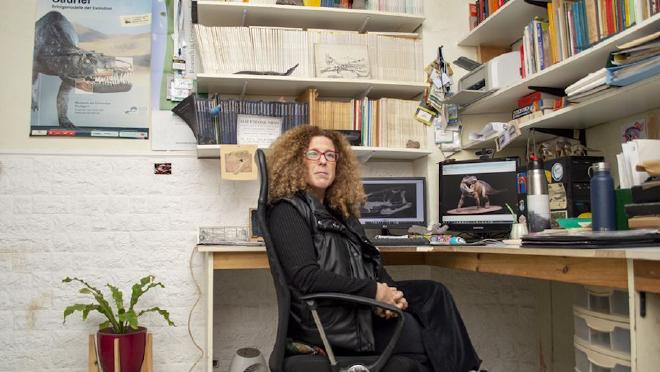
Además de Cardillo y Desojo, integran el equipo de investigación: María Belén von Baczko, Martín Ezcurra y Agustín Martinelli, investigadores del CONICET en el Museo Argentino de Ciencias Naturales “Bernardino Rivadavia” (MACNBR, CONICET); Nahuel Vega, investigador de la Comisión Nacional de Energía Atómica (CNEA), y Lucas Fiorelli, investigador del CONICET en el CRILAR.
Cita #
- El estudio A new large paracrocodylomorph archosaurian from the Tarjadia Assemblage Zone (upper Ladinian to lower Carnian) of the Chañares Formation (Argentina) and a revision of key loricatan features (Un nuevo arcosaurio paracrocodilomorfo de gran tamaño procedente de la Zona de Ensamblaje de Tarjadia (Ladiniense superior a Carniense inferior) de la Formación Chañares (Argentina) y una revisión de las características clave de los loricatos.) fue publicado en Papers in Palaeontology
Cardillo, A.F., Desojo, J.B., von Baczko, M.B., Ezcurra, M.D., Martinelli, A.G., Vega, N. and Fiorelli, L.E. (2026), A new large paracrocodylomorph archosaurian from the Tarjadia Assemblage Zone (upper Ladinian to lower Carnian) of the Chañares Formation (Argentina) and a revision of key loricatan features. Pap Palaeontol, 12: e70086. https://doi.org/10.1002/spp2.70086
Contacto [Notaspampeanas](mailto: notaspampeanas@gmail.com)