


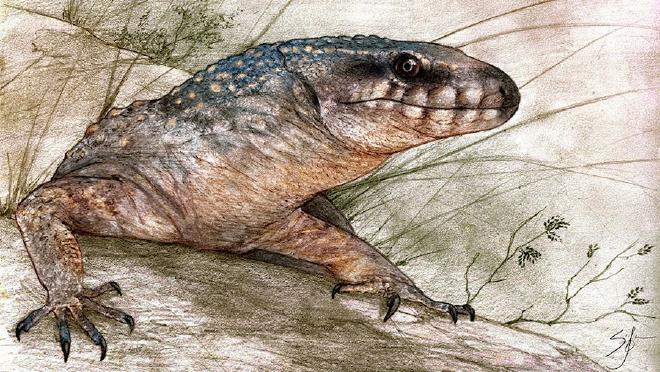
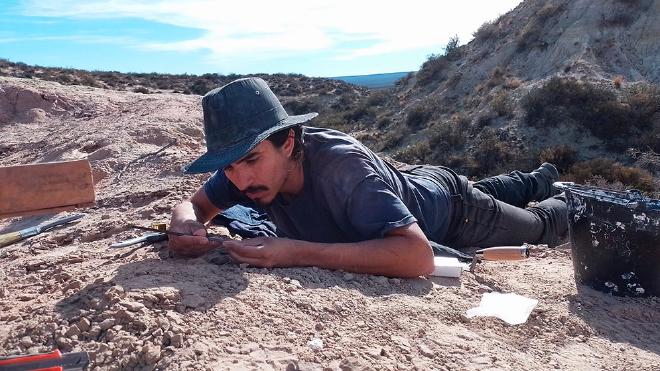
Un equipo paleontológico internacional, encabezado por científicos del CONICET en el Laboratorio de Anatomía Comparada y Evolución de los Vertebrados (LACEV) del Museo Argentino de Ciencias Naturales (MACN, CONICET), halló en la provincia de Río Negro restos fósiles de un reptil que vivió hace unos 70 millones de años. Se trata del lagarto terrestre más completo conocido para el Cretácico tardío, período cuya finalización, hace 65 millones de años, estuvo marcada por la extinción de tres cuartas partes de las especies de plantas y animales que habitaban la Tierra, incluidos todos los dinosaurios (con excepción de las aves). El descubrimiento, publicado en la revista Scientific Reports, aporta evidencia clave para comprender la evolución de los reptiles en los continentes del hemisferio sur en el período previo a aquel suceso.
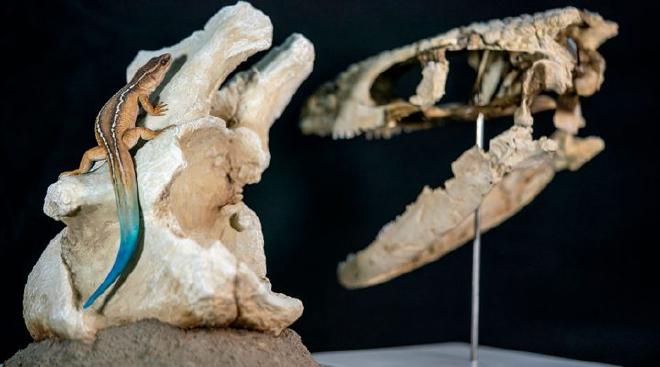
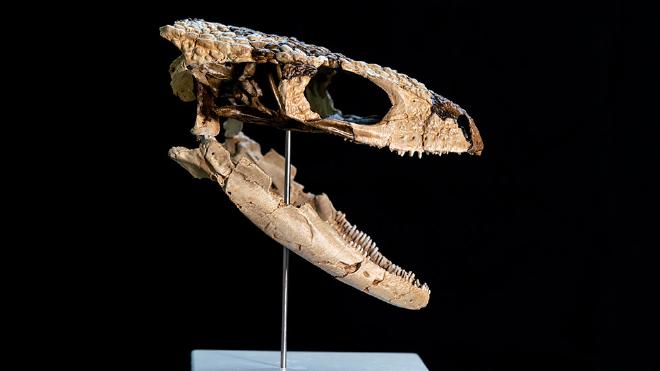
Según la descripción de los científicos, Paleoteius era un pequeño reptil de poco más de 15 centímetros de largo, con un cráneo fuertemente ornamentado por pequeñas protuberancias y quijadas armadas de numerosos dientes finos, simples y uniformes, que posiblemente le hayan servido para capturar insectos.
Estudio interdisciplinario #
El estudio del fósil fue posible gracias a la utilización de tecnologías de avanzada que permitieron analizarlo sin dañar los restos. En este sentido, los especialistas destacan que el uso de microtomografía computada permitió reconstruir digitalmente la anatomía interna del ejemplar con una resolución micrométrica. Estos estudios fueron realizados en colaboración con científicos de la Comisión Nacional de Energía Atómica (CNEA). Con estos datos, pudieron crear modelos tridimensionales que facilitaron el análisis anatómico y comparativo.
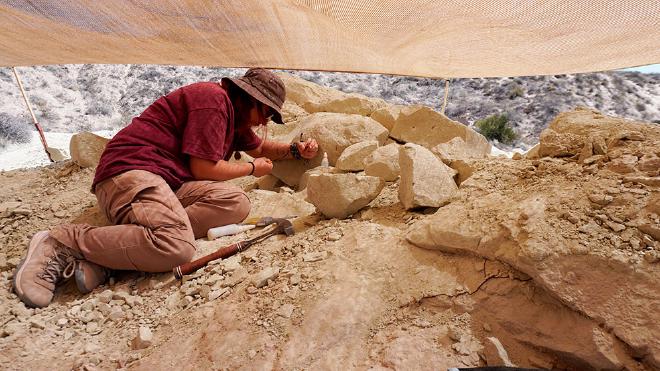
Además, los análisis filogenéticos, claves para entender las relaciones genealógicas de la nueva especie, requirieron el uso de recursos computacionales de alto rendimiento provistos por el Centro de Computación de Alto Desempeño (CCAD) de la Universidad Nacional de Córdoba (UNC), parte del sistema nacional SNCAD-SICYT.
Clasificación filogenética #
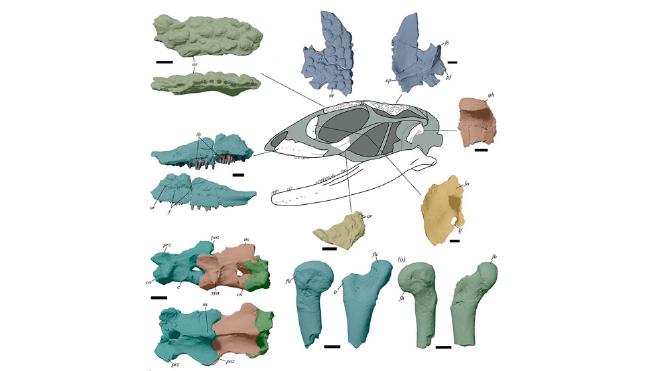
En ese contexto, Paleoteius no solo amplía el registro de lagartos para los continentes del sur, sino que revela la existencia de linajes desconocidos hasta ahora en Sudamérica al no pertenecer a ningún grupo conocido. Por otro lado, los análisis indican que los parientes más cercanos de este lagarto estarían ampliamente distribuidos en otros continentes, lo que mostraría que los lagartos ya estaban diversificados en Gondwana -bloque continental meridional que formó parte del supercontinente Pangea.
Según el análisis de los especialistas, la estructura de la mandíbula y el cráneo permiten ubicarlo dentro de los Scincomorpha, un gran grupo de lagartos que en la actualidad incluye formas muy diversas -como escíncidos, cordílidos y xantúsidos- distribuidas en casi todo el mundo, pero que hasta ahora carecían de restos fósiles en América del Sur.
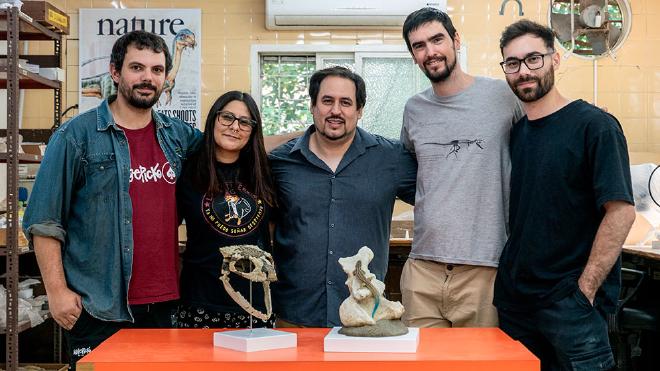
Además del equipo del LACEV, en el hallazgo y descripción del fósil también participaron científicos de la Fundación de Historia Natural Félix de Azara, el Museo Patagónico de Ciencias Naturales, la Comisión Nacional de Energía Atómica y un colega de la Universidad de Frankfurt (Alemania).
Cita #
-
El estudio A new late Cretaceous squamate from Patagonia sheds light on Gondwanan diversity. (Un nuevo squamata o escamoso del Cretácico tardío procedente de la Patagonia arroja luz sobre la diversidad de Gondwana.) fue publicado en Scientific Reports. Autores: Agnolín, F. L., Aranciaga-Rolando, M., Álvarez-Herrera, G., Ezcurra, M. D., Rodríguez, A. M., Chafrat, P., … & Novas, F. E. (2026)
-
El artículo Científicos del CONICET hallan en la Patagonia argentina un nuevo reptil de 70 millones de años, con la firma de Miguel Faigón fue publicado en la sección de noticias del CONICET
Contacto [Notaspampeanas](mailto: notaspampeanas@gmail.com)