


  1. Posts/

Does agriculture and climate affect feeding activities of soil animals?

·2 mins·
Notaspampeanas
Göttingen University Soil Science Biodiversity Agriculture Climate Change Ecology Trophic Diversity Scientific Research Nature
Notaspampeanas
Author
Notaspampeanas
Digging on curiosity and science.
Table of Contents

Soils are home to some of the most diverse animal communities on Earth. These animals – including nematodes, springtails, mites, earthworms, spiders and other arthropods – drive decomposition, regulate microbial communities and contribute to nutrient cycling. However, little is known about how these animals’ “trophic diversity” – meaning the variety of feeding activities – is affected by land use and climate.

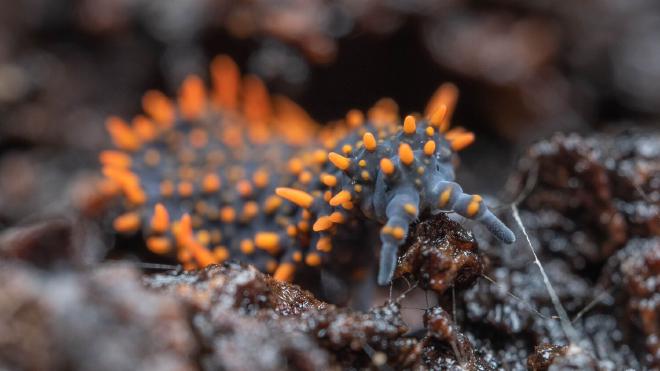
This springtail (Collembola) is one of the tiny creatures in soil that, along with other animals like spiders and earthworms, contributes to nutrient cycling and decomposition. Researchers analysed soil from 19 countries to explore how the variety of feeding activities of such animals changed according to climate and agriculture. Image credit: Frank Ashwood

An international research team led by the University of Göttingen has now shown that soil animal communities have greater trophic diversity in agricultural ecosystems and in tropical regions. The study analysed carbon and nitrogen stable isotope ratios from over 17,000 soil samples, covering 28 major groups of organisms from 456 sites across 19 countries. The results were published in Nature Ecology & Evolution.

The researchers found that animals that feed on microorganisms – such as nematodes, springtails and mites – had higher trophic diversity than those that feed on dead organic matter or live as predators.

This suggests that microbial feeders exploit a particularly broad range of resources and occupy more varied trophic positions – meaning where they are on the interconnected food chains in an ecosystem. One of the most surprising findings was that soil animal trophic diversity was about 32% higher in agricultural systems than in woodlands.
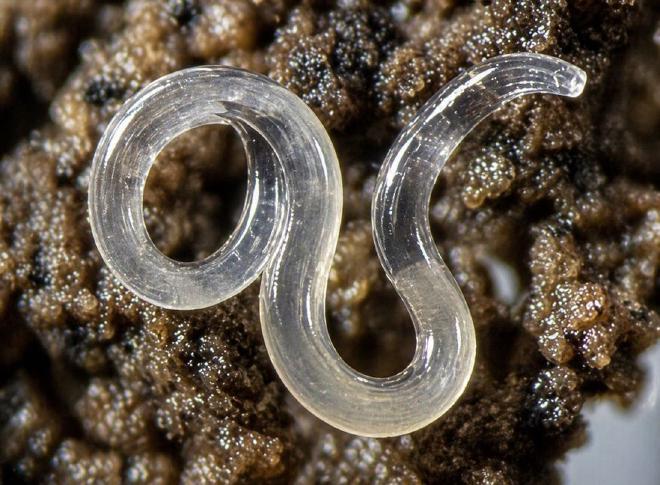
Nematodes have adapted to a range of ecosystems across the land and sea. Most, like this one, live in the soil feeding on living material. They are one of the groups of animals that were part of the study about effects of different environments on the diversity of feeding activities. Image credit: Haifeng Yin

This contrasts with the common expectation that intensive land use generally simplifies ecological communities. The researchers suggest that agricultural environments, where resources are often more limited and patchily distributed, may force soil animals to broaden their diets or divide resources more strongly among groups of organisms.

“This does not mean that agriculture is beneficial for soil biodiversity,” said Dr Zheng Zhou, first author of the study, who is now at Hohenheim University. “Rather, our results suggest that soil animals in agricultural systems may respond to resource limitation and disturbance by expanding how they feed. This feeding flexibility likely helps to maintain soil functions, but it may also reflect the loss of specialized species.”

The study also found that trophic diversity was about 40% higher in tropical than in temperate regions. Tropical soils are typically characterized by fast decomposition, low accumulation of organic matter and strong competition for resources. Under these conditions, soil animals may partition resources more finely or expand the range of resources they use. The higher diversity of feeding activities in the tropics was therefore linked not only to higher species richness, but also to stronger niche differentiation among soil animal groups.

“Our findings show that soil animal communities adjust their specific position in a food chain or web, with changes in land use,” said Stefan Scheu, Professor of Animal Ecology at Göttingen University and a senior author of the study. “This flexibility may help to buffer ecosystem processes such as decomposition and nutrient cycling in the face of global change. However, it also raises the question of whether soil animals who are flexible generalists in the long-term can replace the role of specialists in disturbed ecosystems.”

The study highlights that soil biodiversity cannot be understood by counting species alone. The feeding roles of soil animals, and how these roles change across land-use systems and climate regions, are crucial for predicting the stability and functioning of soil systems under global change.

Citation
#

  • The study “Greater trophic diversity of soil animal communities under agricultural land use and tropical climate”. Authors: Zheng Zhou (周正), Nico Eisenhauer, Andrew D. Barnes, Melanie M. Pollierer, Malte Jochum, Ingo Grass, Yan Zhang, Ulrich Brose, Fujio Hyodo, Nicole Scheunemann, Olaf Schmidt, Yuanyuan Huang, Bernhard Klarner, Anton A. Goncharov, Alena Krause, Daniil Korobushkin, Anastasia Gorbunova, Ilya I. Lyubechanskii, Sergey M. Tsurikov, Julia Seeber, Michael Steinwandter, Vladimir A. Zryanin, Oksana L. Rozanova, Winda Ika Susanti, Felicity V. Crotty, Di Ajeng Prameswari, Zhipeng Li, Carol Melody, Zhijing Xie, Xue Pan, Donghui Wu, Mark Maraun, Katerina Sam, Alexei V. Tiunov, Stefan Scheu & Anton Potapov (2026) Nature Ecology & Evolution 2026. DOI: 10.1038/s41559-026-03014-4

  • The article Does agriculture and climate affect feeding activities of soil animals? was published in the news section of the Göttingen University.


Contact [Notaspampeanas](mailto: notaspampeanas@gmail.com)


Related

La Pampa: The Ministry of Production participated in the national debate on the Seed Law
·3 mins
Notaspampeanas
Why some volcanoes don’t explode
·5 mins
Notaspampeanas
Volcanoes ETH Zurich
Theia and Earth Were Neighbors
·6 mins
Notaspampeanas
Planetary Science Geochemistry
La Pampa: Comprehensive activities to raise awareness about Diabetes
·4 mins
Notaspampeanas
La Pampa World Diabetes Day
Reeds can promote the proliferation of mosquitoes in rivers, canals and ponds
·5 mins
Notaspampeanas
Ecology Arundo Donax Mosquitoes Reeds
When oxygen determines if a limb can regrow
·5 mins
Notaspampeanas
Tissue Regeneration Vertebrate Limb Regenerate Oxygen-Sensing Amphibians