


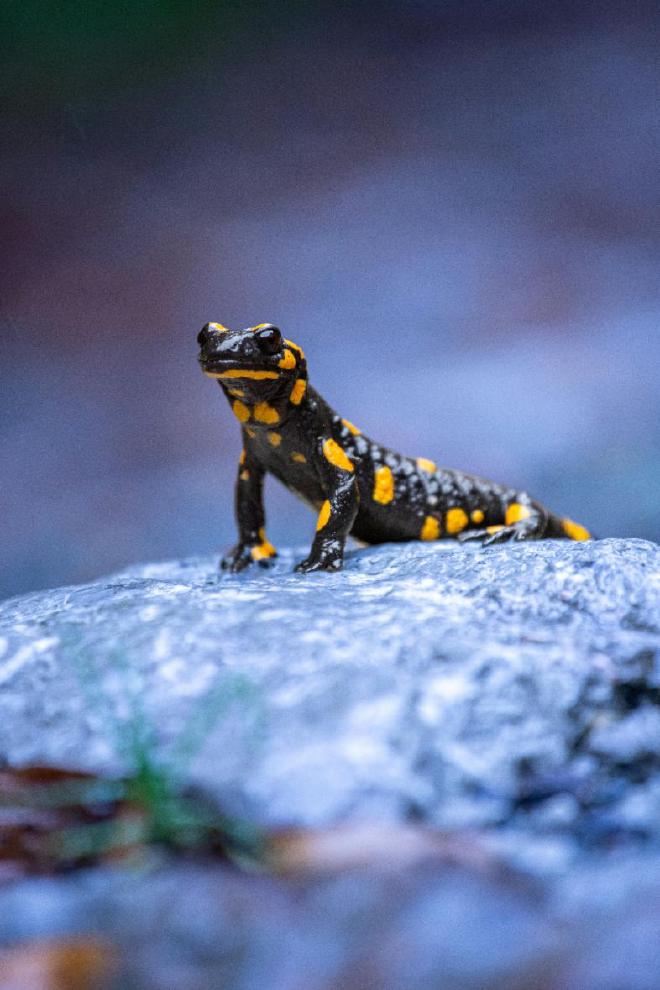
Limb regeneration begins with wound healing. After amputation, cells at the injury site must rapidly seal the wound and switch into regenerative cell types. In amphibians, this process runs smoothly. In mammals, it stalls early. Wound closure is slow and scar formation takes over, blocking regeneration.
What is unclear is whether this difference played a direct role in regeneration or was merely a consequence of lifestyle.
A team led by Can Aztekin** at **EPFL (now at the Friedrich Miescher Laboratory of the Max Planck Society) discovered that oxygen plays a crucial role in limb regeneration. By comparing amputated limbs from frog tadpoles and embryonic mice, the researchers found that the way cells sense oxygen determines if regeneration can even begin.
The study was published in Science.
A latent regenerative capacity #
“For a long time, regeneration research focused on amphibians, while mammalian regeneration was rarely examined experimentally side by side in a comparable manner,” Aztekin said. “Although many studies showed that regenerative species such as amphibians and mammals share similar genes, suggesting that mammals may retain a latent regenerative capacity, it remained unclear whether mammalian tissues can indeed activate limb regenerative programs, and what prevents them from doing so.”
They tracked how cells responded by measuring wound closure, cell movement, gene activity, metabolism, and epigenetic states, including changes to DNA packaging. The work focused on HIF1A, a protein that acts as a cellular oxygen sensor. When oxygen is low, HIF1A becomes stable and activates programs that set the stage for wound healing and regeneration.
A change in cell behavior #
Low oxygen also changed cell behavior, with skin cells becoming more mobile and altering their mechanical properties. Metabolism shifted toward glycolysis, a process that takes place in low-oxygen states. At the same time, chemical marks on DNA-associated proteins shifted to favor the activation of regeneration-related genes.
By comparing frogs, axolotls, mice, and human datasets, the team found a consistent pattern. Regeneration-competent amphibians show reduced oxygen-sensing capacity, allowing regenerative programs to be initiated and sustained. Mammals show the opposite pattern. Their cells respond strongly to oxygen and switch regenerative programs off soon after injury.
A fresh perspective to centuries-old question #
Importantly, the findings demonstrate the activation of regenerative mechanisms in mammals, not the complete regrowth of a fully formed limb. But although the study does not claim that human limb regrowth is imminent, it does show that differences once thought to be fixed between species may instead hinge on how cells respond to their environment.
**“We are very excited about our findings,”**Aztekin said. “By directly comparing species that can and cannot regenerate, we bring a fresh perspective to a centuries-old question. Our results show that regenerative programs can be triggered in mammalian tissues and begin to outline a clear, testable path toward promoting limb regeneration in adult mammals.”
Citation #
- The study Species-specific oxygen sensing governs the initiation of vertebrate limb regeneration was published in Science magazine. Authors: Georgios Tsissios, Marion Leleu, Kelly Hu, Alp Eren Demirtas, Hanrong Hu, Sabrina Vinzens, Toru Kawanishi, Evangelia Skoufa, Atharva Valanju, Alessandro Valente, Lorenzo Noseda, Haruki Ochi, Antonio Herrera, Selman Sakar, Mikiko Tanaka, Sara A. Wickström, Fides Zenk, and Can Aztekin
Science 9 Apr 2026 Vol 392, Issue 6794 DOI: 10.1126/science.adw8526
Other contributors #
-
EPFL NeuroNA Chair in Epigenomics of Neurodevelopmental disorders (EpiGN)
-
EPFL Bioinformatics Competence Center
-
Max Planck Institute for Molecular Biomedicine
-
Institute of Science Tokyo
-
EPFL Institute of Bioengineering
-
Kobe University
Funding #
- Max Planck Society
-Friedrich Miescher Laboratory of the Max Planck Society
-EPFL ELISIR
-
Gabriella Giorgi-Cavaglieri Foundation
-
Swiss National Science Foundation
-
Branco Weiss Fellowship
-
Novartis Foundation
-
Swiss 3R Competence Center
References #
Georgios Tsissios, Marion Leleu, Kelly Hu, Alp Eren Demirtas, Hanrong Hu, Sabrina Vinzens, Toru Kawanishi, Evangelia Skoufa, Atharva Valanju, Alessandro Valente, Lorenzo Noseda, Haruki Ochi, Antonio Herrera, Selman Sakar, Mikiko Tanaka, Sara A. Wickström, Fides Zenk, Can Aztekin. Species-specific oxygen sensing governs the initiation of vertebrate limb regeneration. Science 09 April 2026. DOI: 10.1126/science.adw8526
Contact [Notaspampeanas](mailto: notaspampeanas@gmail.com)