



Imaginen que tenemos una página en blanco delante nuestro. No se ve nada en ella, así que empiezas a garabatear en ella. A medida que avances, irás añadiendo más información. Este concepto se llama tabula rasa – conocida como la ’tabla rasa'.
Es diferente si ya hay algo en la hoja. Se añade nueva información o se elimina la información antigua. Este es el principio de la tabula plena – la ’tabla completa’.
Esta controversia también está instalada en la biología: entre los genes que proporcionan los bloques básicos y los factores externos que moldean un organismo.
Esta es precisamente la cuestión que los neurocientíficos del Grupo Jonas del Instituto de Ciencia y Tecnología de Austria (ISTA) están abordando en relación con el hipocampo, la región del cerebro humano implicada en la formación de la memoria y la navegación espacial. Más concretamente, ¿cómo se desarrolla la red nerviosa central en el hipocampo tras el nacimiento? ¿Esto tiene que ver con la tabula rasa o la tabula plena?
En un principio, más. Luego menos #
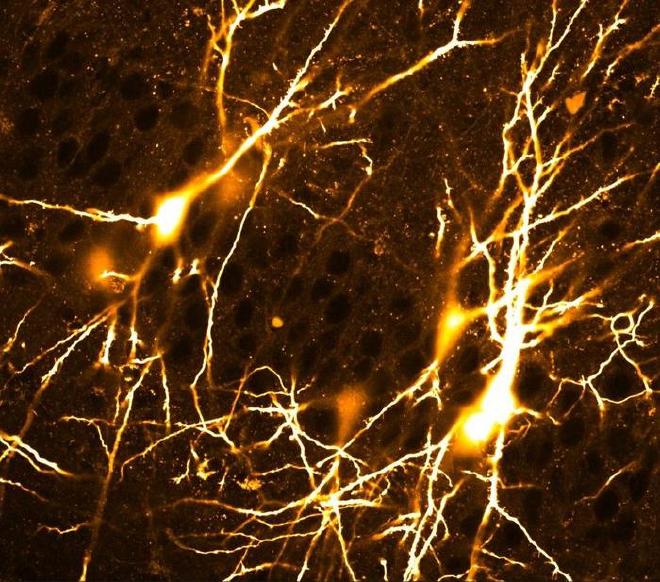
Para su proyecto, el ex-alumno de ISTA, Víctor Vargas-Barroso estudió ratones en tres etapas diferentes de desarrollo: poco después del nacimiento (días 7 – 8), adolescencia (días 18 – 25) y adultos (días 45 – 50).
Para el análisis, el investigador utilizó la ’técnica de la abrazadera de parche’. *En este proceso, se miden pequeñas señales eléctricas en ciertas áreas de las células nerviosas, por ejemplo, en los extremos que envían señales (terminaciones presinápticas) o en las ramas que reciben señales (dendritas). Además, se utilizaron microscopios sofisticados para observar lo que ocurre dentro de las células, así como métodos especiales basados en láser para activar compuestos individuales de manera dirigida.
¿Qué resultó? #
“Este descubrimiento fue sorprendente”, dijo Peter Jonas. “Intuitivamente, esperarías que una red creciera y se volviera más densa con el tiempo. Aquí, sin embargo, vemos exactamente lo contrario. Es un modelo inverso: al principio está lleno, luego se refina y optimiza”.
¿Una red eficiente a través de tabula plena? #
Por qué ocurre esto… solo se puede conjeturar por ahora. Sin embargo, Jonas podía imagina que una red que inicialmente se ramificara muy ampliamente permitiría que las células nerviosas se conectaran rápida y eficientemente entre sí, una ventaja decisiva en el hipocampo. Esta región no solo almacena impresiones visuales, olfativas o auditivas individuales, sino que también vincula toda esta información entre sí.
Si, por otro lado, la red fuera una tabula rasa desde el principio y todas las conexiones tuvieran que formarse de nuevo, las células estarían inicialmente demasiado separadas: una comunicación eficiente sería difícilmente posible.
Información sobre experimentos con animales: #
- Para comprender mejor los procesos fundamentales en los campos de la neurociencia, la inmunología o la genética, por ejemplo, el uso de animales en la investigación es esencial. Ningún otro método, como los modelos in silico, puede servir como alternativa. Los animales se crían, mantienen y tratan conforme a las estrictas directrices legales aplicables en Austria. Todos los experimentos con animales están aprobados por el Ministerio Federal de Educación, Ciencia e Investigación.
Cita #
- El estudio Developmental emergence of sparse and structured synaptic connectivity in the hippocampal CA3 memory circuit (Surgimiento en desarrollo de conectividad sináptica escasa y estructurada en el circuito de memoria CA3 del hipocampo) fue publicado en Nature Communications
Financiación #
H2020 European Research Council, H2020 Marie Skłodowska-Curie Actions, Fond zur Förderung der Wissenschaftlichen Forschung, Fond zur Förderung der Wissenschaftlichen Forschung, NOMIS Stiftung, CONACYT fellowship
Contacto [Notaspampeanas](mailto: notaspampeanas@gmail.com)