


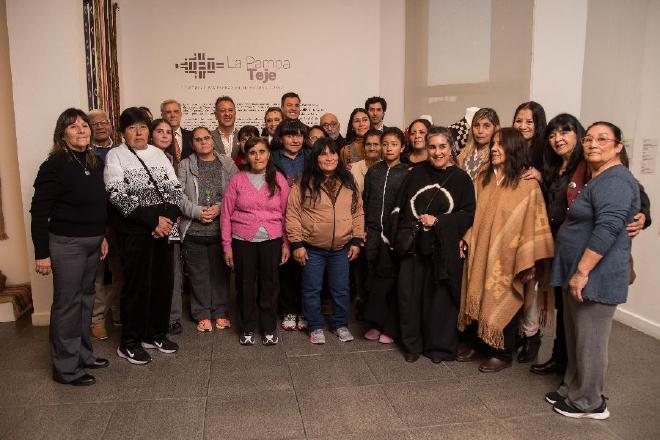
With the participation of 23 weavers from western La Pampa, the “La Pampa Teje” exhibition opened at the National Bicentennial House. The exhibition invites visitors to explore the province through the colors, designs, and textures of a series of textiles woven on traditional looms, using ancestral techniques and knowledge such as hand-spinning from sheep’s wool and dyeing with natural dyes.
The opening ceremony was attended by the Minister of Government and Municipal Affairs of La Pampa, Pascual Fernández; the Secretary of Culture, Pablo Lucero; the Secretary of Tourism, Saúl Echeveste; the National Deputy for La Pampa, Abelardo Ferrán; the Director General of the La Pampa House, Pablo Rubio; the Director of Handicraft Production, Andrea Pombar; and the researcher Matilde Ruggero, from the Directorate of Cultural Heritage. Representing the National Bicentennial House was its Director, Rodolfo Rau.
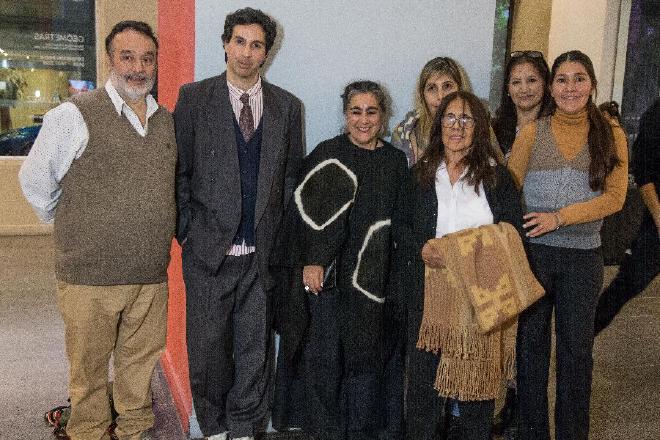
The Weavers #
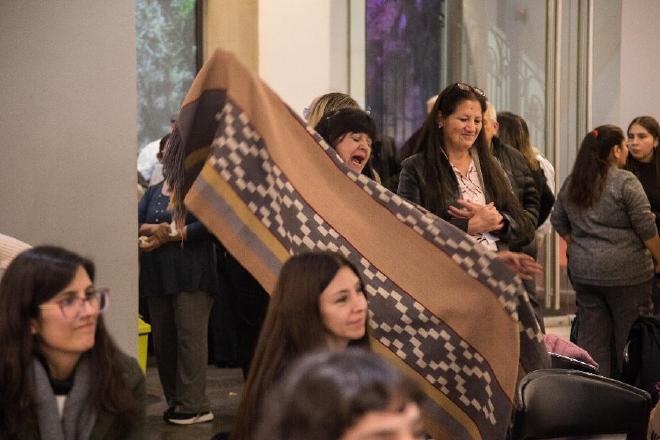
Cultural Heritage of La Pampa: #
The weaving technique on a loom was declared of legislative interest and recognized as Cultural Heritage of the Province of La Pampa in 2020, as part of public policies for the protection and enhancement of cultural heritage.
Transmitted orally from generation to generation, this practice is part of the social, cultural, and economic life of many families in the western part of the province and maintains historical ties with the indigenous peoples of the La Pampa region, particularly the Ranquel people.
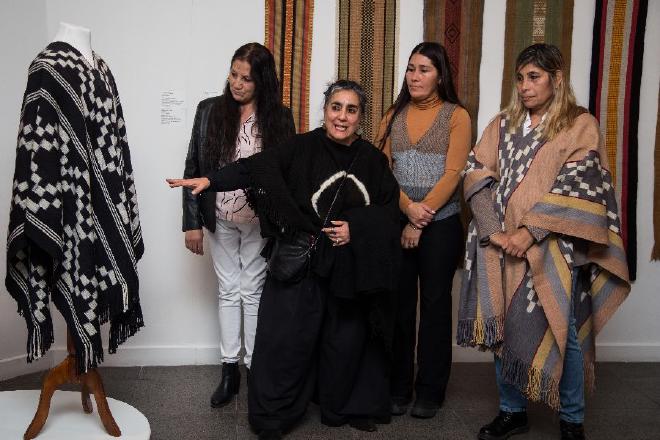
Minister Pascual Fernández said: “I bring you greetings from our governor, Sergio Ziliotto, and also his support and recognition for each of the artisans from communities across our territory, such as Santa Isabel, Colonia Emilio Mitre, Victorica, Puelén, and Chos Malal. That their work and art are represented here today is profoundly significant, but the presence of the artisans themselves gives this exhibition an even greater dimension: that of family and community knowledge passed down from generation to generation, which forms part of our identity as people of La Pampa.”
“I want to thank the Casa de La Pampa, the Artisan Market, the Secretariat of Tourism, the Secretariat of Culture, and the Cultural Heritage area for their work. These actions demonstrate the importance of public policies that promote the dissemination of this knowledge and guarantee its preservation for future generations. They are concrete actions by the La Pampa government in defense of the identity and culture of our territory”, he added.
Meanwhile, the Secretary of Culture, Pablo Lucero, highlighted the role of the provincial government. “Seeing this exhibition in Buenos Aires fills me with immense pride, for our weavers, for our province, and for a government administration that demonstrates how important this is to us. It’s an example of the synergy between culture and tourism, and of how cultural industries can drive a circular economy that contributes to the development of the western region,”.
With over 40 years of history, the Provincial Artisan Market is the channel that connects the work of artisans from La Pampa with consumers. “When we took office, what we did with the Artisan Market was to federalize it. Today we have five branches, in addition to the main office in Santa Rosa, and another eight are in the process of being established. This allows us to have a broad representation of artisans from across the province,” explained the Secretary of Tourism, Saúl Echeveste.
“That they come to Buenos Aires today to exhibit what they create with so much work and dedication is fundamental. Each of these crafts speaks of a sense of belonging, of identity, and of deep connection to their places. It is a very important cultural heritage that identifies and characterizes us at a national level,” he stated.
During the inauguration, the public gathered at the National Bicentennial House enjoyed a performance by Laura Gómez Weizz, a folk singer from Santa Rosa, who performed classics from her repertoire deeply rooted in the folk songbook of La Pampa. The event concluded with a tasting of wines and regional products from La Pampa.
The director of the Casa de La Pampa, Pablo Rubio, emphasized the story behind each handcrafted product. “When we talk about a textile, we’re also talking about the stories of those who weave it, about surnames linked to the settlement of the territory, and about members of the Ranquel community. They preserve knowledge and techniques that were once used daily and that today are transformed into pieces with profound identity, capable of representing the relationship between the land, history, and subsistence,” he noted.
The curatorship of Roxana Amarilla and the production of Fernando Martumanian provided a specialized approach to situate La Pampa textiles within contemporary dialogues on culture, art, work, and territory.
“La Pampa Teje” will remain on display at the Casa Nacional del Bicentenario until July 19 and can be visited from Wednesday to Sunday, from 3:00 p.m. to 8:00 p.m., at Riobamba 985, Autonomous City of Buenos Aires.
After this first stage, the exhibition will continue its tour at the Casa de La Pampa, located at Suipacha 346, where it can be visited from August 3 to September 3. Its presence at the La Pampa representative office will connect the exhibited pieces with the permanent space of the Mercado Artesanal (Craft Market) in Buenos Aires and further promote the work of artisans from La Pampa.
Contact [Notaspampeanas](mailto: notaspampeanas@gmail.com)