

  1. Posts/

INTA studies Pitahaya varieties to boost cultivation in northern Argentina

·3 mins·
Notaspampeanas
Argentina INTA Yuto Pitahaya
Notaspampeanas
Author
Notaspampeanas
Digging on curiosity and science.

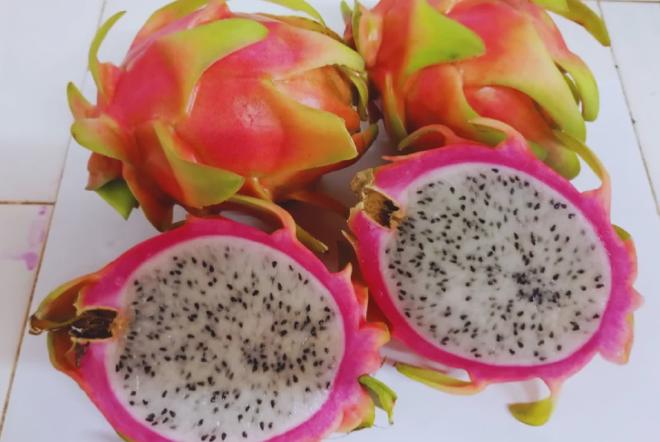
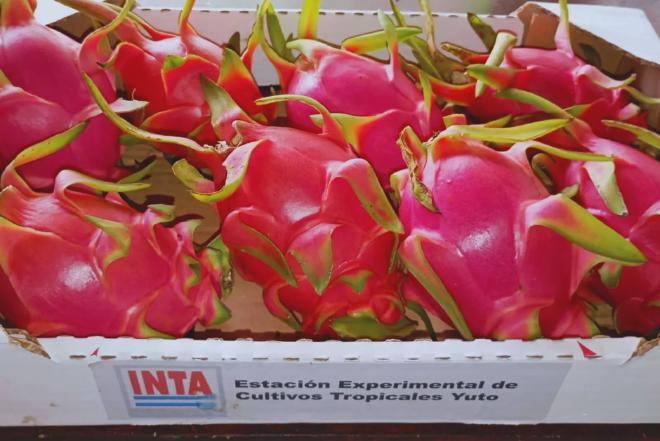
Pitahaya cultivation, also known as dragon fruit, is gaining ground in various production systems across the country. Although its introduction is relatively recent, there are already established practices in Argentina provinces such as Formosa, Jujuy, Salta, Misiones, Corrientes, and Entre Ríos, where producers are exploring the potential of this high-value tropical fruit. In northern Argentina, specialists from INTA (National Institute of Agricultural Technology) are supporting this process through research aimed at improving production and evaluating the crop’s adaptations to the region’s agro-environmental conditions.

“It’s a plant that belongs to the cactus family, and it’s a perennial crop characterized by its hardiness and ability to adapt to different environments. However, to achieve good yields, it requires specific management conditions,” explained Carina Armella, a specialist at INTA Yuto, who also clarified that “despite being a cactus that tolerates drought, it needs heat, humidity, and high light levels to produce fruit. If it doesn’t have these conditions, it can survive, but it won’t flower or produce fruit.”

Currently, the fruit is already being sold in various markets across the country. Initially, demand was concentrated in Buenos Aires, where Asian communities were already familiar with and consumed the fruit. However, in recent years interest has grown, and more and more producers are exploring its cultivation.

“Today there are already producers in Jujuy who are marketing pitahaya, and there are also more and more people interested in incorporating this species and its different varieties to expand diversity and extend the harvest season,” Armella highlighted.

In this regard, INTA is working on the evaluation of different genetic materials with the aim of identifying the varieties best adapted to northern Argentina. Currently, 12 varieties belonging to four species of the genus Selenicereus (Selenicereus monocanthus, S. undathus, S. megalathus, and S. purpusi) are being analyzed.

Among the species evaluated are the pitahayas with white pulp, red or fuchsia pulp and the yellow variety, palora type, each with particular characteristics both in the plant and in the quality and yield of the fruit.

Some clones are completely self-incompatible, meaning they do not produce fruit without cross-pollination; others are partially compatible, producing fruit in a low percentage and of low weight.

Armella explained that “varieties that are completely self-fertile have a higher fruit set percentage and are less dependent on hand pollination. Self-fertility is heritable but complex and varies within the same species.” She also emphasized that “there are self-fertile and incompatible varieties within the same species.”

The plant has characteristics that cannot be distinguished simply by looking at it. Hence the importance of a prior evaluation and the acquisition of certified plants before starting cultivation. “All these characteristics are being evaluated, from their floral biology and behavior in response to crossbreeding to the quality of the fruit they produce,” Armella added.

Another key aspect being studied is the influence of light on crop development. As a species of tropical origin, pitahaya needs around 12 hours of light and daytime temperatures of 30°C and nighttime temperatures of 20°C to induce flowering.

To extend this productive period, some trials incorporate artificial lighting with LED lights, a strategy that allows flowering to continue for a few more weeks in the fall, until temperatures drop below 15°C, when the plant reduces its physiological activity. “In Jujuy, these conditions occur mainly during spring and summer. When the hours of daylight decrease, the plant stops flowering,” the researcher concluded.


Contact [Notaspampeanas](mailto: notaspampeanas@gmail.com)


Related

Successful response to AI training focused on everyday life
·2 mins
Notaspampeanas
Termo Tango: mate and dancing on the steps of UNLPam
·2 mins
Notaspampeanas
Nutrition impacts grain yield and quality
·3 mins
Notaspampeanas
Argentina INTA Balcarce Soil Degradation
CONICET incorporates artificial intelligence to identify potential specialists
·4 mins
Notaspampeanas
Argentina CONICET Scientific and Technological Researcher Career Artificial Intelligence
CONICET specialists are working on the development of thermoacoustic insulators from wine-making waste
·5 mins
Notaspampeanas
CONICET Circular Economy Thermoacoustic Insulators Construction Industry
La Pampa celebrated Flag Day and the cultural agenda was announced
·4 mins
Notaspampeanas
La Pampa Flag Day Cultural Agenda Manuel Belgrano