


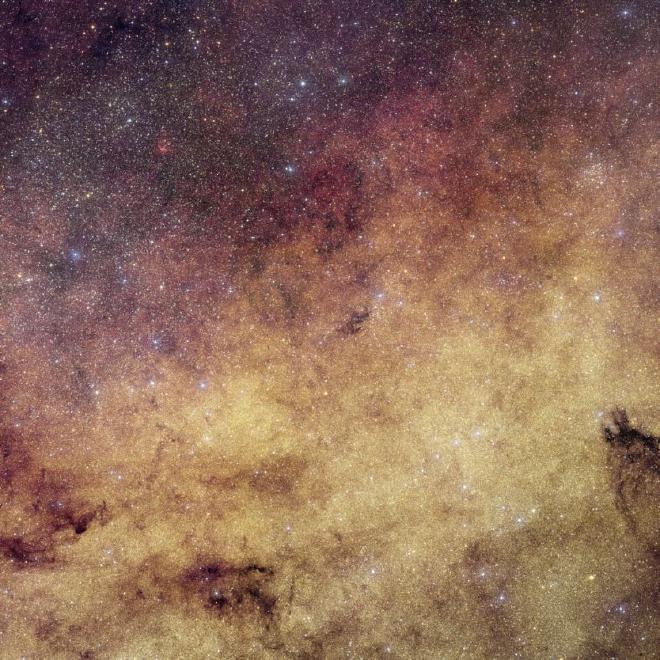
Diseñada para observar miles de millones de galaxias lejanas, la cámara de luz visible del telescopio espacial europeo es lo suficientemente sensible como para distinguir estrellas individuales en nuestro superpoblado bulbo galáctico, sin quedar cegada. Esta excepcional capacidad es crucial para el propósito de los científicos al utilizar esta imagen: estudiar planetas alrededor de otras estrellas mediante una técnica especial llamada microlente gravitacional. Pero antes de profundizar en ello, observemos con más detalle esta impresionante imagen.
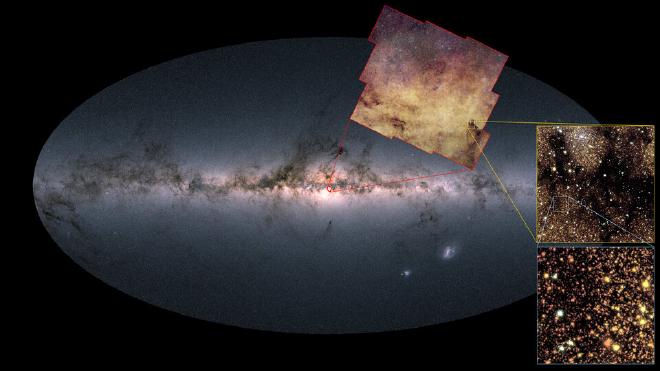
El 23 de marzo de 2025, Euclides capturó la enorme fotografía que encabeza el artículo, en apenas 26 horas. Es un mosaico de nueve “capturas” de su cámara de luz visible, y cada captura cubre una porción del cielo más grande que la Luna llena. Para el estudio del bulbo galáctico, con el fin de mantener las observaciones lo más estables posible, solo se utilizó la cámara visible (VIS) de Euclides. Por eso la imagen original está en blanco y negro. Para añadir color a la fotografía para este artículo, fueron añadidos datos del Telescopio Canadá-Francia-Hawái (CFHT), ubicado en la superficie terrestre.
Sobre Euclides #
La misión Euclides fue lanzada en julio de 2023 e inició sus observaciones científicas rutinarias el 14 de febrero de 2024. El objetivo de la misión es revelar la influencia oculta de la materia oscura y la energía oscura en el universo visible. Durante un período de seis años, Euclides observará las formas, distancias y movimientos de miles de millones de galaxias hasta una distancia de 10 mil millones de años luz.
En comparación, la nitidez y sensibilidad de Euclides en luz visible son similares a las de la cámara de campo amplio del Telescopio Espacial Hubble de la NASA/ESA. Sin embargo, cada imagen que Euclides captura en pocas horas abarca un área 270 veces mayor que el campo de visión del Hubble. Para observar el mismo mosaico de Euclides, el Observatorio Keck necesitaría alrededor de 2000 horas. Euclides es más rápido y capaz de capturar detalles de estrellas más débiles que de otro modo pasarían desapercibidos al observarlas desde la Tierra. Este único mosaico también abarca toda la región que el futuro telescopio espacial Roman monitorizará en busca de planetas.
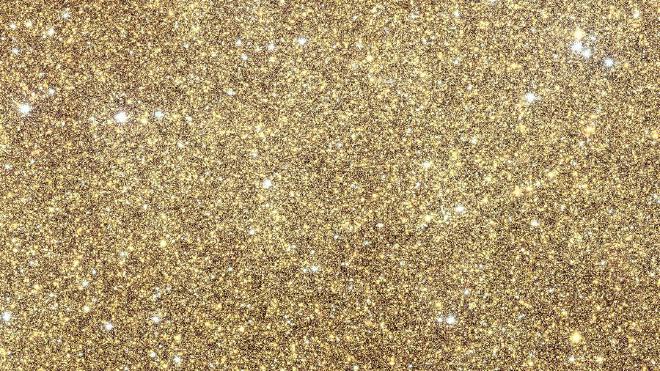
Euclides capturó más de 60 millones de estrellas en esta fotografía, junto con nebulosas y cúmulos estelares. Esta densa región de nuestra galaxia es el lugar perfecto para que los astrónomos busquen exoplanetas mediante el efecto de microlente gravitacional.
Detección de exoplanetas mediante microlentes gravitacionales #
El microlente gravitacional es una forma de lente gravitacional. Si bien Euclides utiliza principalmente el lente gravitacional para explorar objetos masivos y lejanos, como cúmulos de galaxias, esta nueva imagen del centro galáctico ayuda a los científicos a estudiar lentes gravitacionales a escalas más pequeñas, causadas por estrellas y exoplanetas en nuestra propia galaxia.
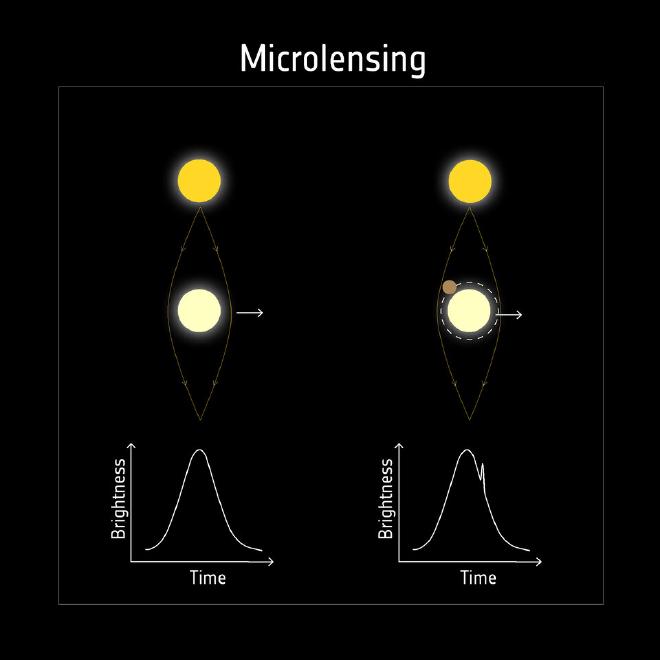
“Para detectar el microlente gravitacional, es necesario observar zonas del cielo densamente pobladas de estrellas, como las cercanas al centro de nuestra galaxia”, explicó Jean-Philippe Beaulieu, del Instituto de Astrofísica de París (Francia) y de la Universidad de Tasmania (Australia). Beaulieu fue el impulsor original del proyecto Euclides para estudiar el bulbo galáctico y codirigió el grupo de trabajo sobre exoplanetas del Consorcio Euclides.
“Durante los últimos veinte años, se han descubierto casi 300 exoplanetas utilizando esta técnica, todos con telescopios terrestres y todos hacia el centro de nuestra galaxia. Esta imagen de Euclides incluye 51 sistemas planetarios conocidos, y ayudará a estudiar muchos más que se descubran”, añadió.
La misión Euclides, de la Agencia Espacial Europea, capturó el corazón de la Vía láctea, un lugar pleno de estrellas.
Esta es la fotografía de alta resolución más grande jamás tomada del centro de nuestra galaxia, la Vía Láctea, en luz visible. Fue capturada el 23 de marzo de 2025 por el telescopio espacial Euclides de la Agencia Espacial Europea. Repleta de más de 60 millones de estrellas, esta imagen abre la puerta a que los científicos confirmen la existencia de cualquier exoplaneta encontrado en esta región y midan su masa utilizando pequeños cambios en la luz estelar a lo largo del tiempo.
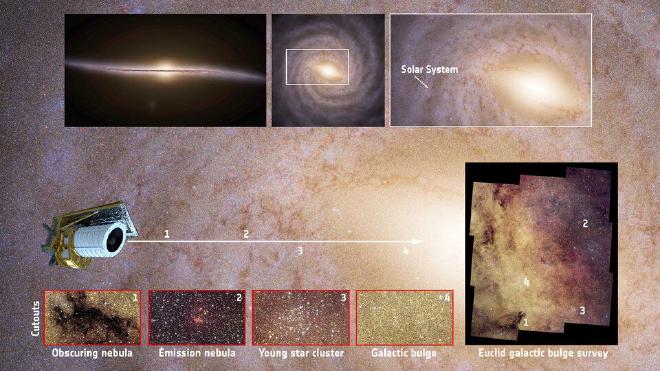
El bulbo galáctico —la región central de nuestra galaxia— es una estructura vasta y densamente poblada, compuesta principalmente por estrellas antiguas y frías, lo que le confiere su característico color amarillo. Visto desde unos 26.000 años luz de distancia, el telescopio Euclides observa el centro de la galaxia a través de un complejo primer plano de material a lo largo de su línea de visión.
Esta vista ultraancha hacia el bulbo revela no solo estrellas, sino también regiones oscuras aparentemente vacías. Estas zonas oscuras no carecen de estrellas: marcan densas nubes moleculares ricas en polvo que absorben y dispersan la luz del bulbo que se encuentra detrás. Mientras Euclid observa a través de dos de los brazos espirales de la Vía Láctea, también encuentra regiones de formación estelar activa, marcadas por estrellas azules masivas recién formadas. Su intensa radiación ultravioleta ioniza el gas de hidrógeno circundante, produciendo un tenue resplandor rojo. Crédito: Agencia Espacial Europea (ESA)
Medición de las masas planetarias con Euclides #
Para detectar un evento de microlente gravitacional, un telescopio necesitaría estudiar una estrella durante más de veinte días. Esto es necesario para observar la irregularidad en la curvatura de la luz a medida que el planeta orbita alrededor de su estrella anfitriona. Por lo tanto, en el único día de observación de Euclides, no se pueden encontrar nuevos eventos. Pero lo que hace que esta imagen sea tan especial es que permite a los científicos medir la masa de planetas ya conocidos, así como de planetas aún por descubrir.
“En 24 horas, Euclides ya ha capturado las estrellas implicadas en todos los futuros eventos de microlente gravitacional que detectará el telescopio espacial Roman, pero antes de que las estrellas y los planetas implicados se hayan alineado”, afirmó Natalia Rektsini, del Instituto de Astrofísica de París (Francia), quien dirigió la publicación de los datos del estudio del bulbo galáctico de Euclides para la comunidad científica.
“Esto significa que cualquiera que detecte un evento de microlente gravitacional en la misma región, por ejemplo con Roman, podrá usar a partir de ahora los datos de Euclides como referencia temporal del pasado y ver cómo eran las estrellas antes de que se superpusieran”, explicó Rektsini. “Como Euclides puede separar claramente las estrellas individuales, se puede medir su velocidad a lo largo del tiempo y usar esa información para confirmar la existencia de un planeta y determinar su masa. Esto no sería posible con datos de un solo momento”.
Planetas helados y más #
Con la mayoría de las técnicas de búsqueda de planetas, es más fácil encontrar planetas grandes y calientes que orbitan estrellas masivas. Sin embargo, con la microlente gravitacional, la situación es diferente. «Esta técnica es imparcial; descubrimos todo lo que hay ahí fuera», afirmó Rektsini. «Es especialmente adecuada para descubrir exoplanetas fríos. Y esperamos que cada estrella de la Vía Láctea albergue al menos un planeta de este tipo».
«Dirigí el equipo que descubrió OGLE-2005-BLG-390Lb hace 20 años», dijo Beaulieu. «Es un planeta helado, un poco como Hoth de Star Wars. Después de todo este tiempo, me entusiasma que Euclides finalmente nos permita medir su masa con precisión».
«OGLE-2013-BLG-341Lb es un sistema raro y fascinante», dijo Rektsini. «Consta de dos estrellas y un planeta. Al combinar observaciones previas de Keck y Hubble con nuevos datos de Euclides, finalmente podemos separar las estrellas y confirmar la masa del planeta».
En tan solo 24 horas, Euclides proporcionó datos únicos sobre el centro de la Vía Láctea, ofreciendo una visión amplia y nítida de esta región. Con el tiempo, la separación entre las fuentes y las lentes aumenta. Por ello, estos datos de Euclid servirán como referencia temporal para misiones pasadas y futuras, y permitirán estudiar exoplanetas y sus masas. Estos datos también pueden utilizarse para otras aplicaciones científicas, desde enanas marrones y estrellas binarias hasta movimientos estelares y polvo en nuestra galaxia.
Contacto [Notaspampeanas](mailto: notaspampeanas@gmail.com)