Orígenes De La Vida
Ciencias De La Vida
Bioquímica
Procesos Bioquímicos
Biocatálisis
Biosíntesis
Biología Evolutiva
Evolución
Historia De La Vida
Química
Biología Química
Biomoléculas
Compuestos De Carbono
Compuestos Inorgánicos
Compuestos Orgánicos
Agua
Solventes
Modelos Químicos
Química Molecular
Química Del Agua
Moléculas De Agua
Autor
Notaspampeanas
Notaspampeanas
Tabla de contenido
Tabla de contenido
Frankfurt, Alemania. Las bacterias son organismos vivos que consisten en una sola célula y, al principio, solo se autorregulan a sí mismas. No obstante, muchos tipos de bacterias pueden formar colonias que se comportan como un organismo complejo. Dentro de estos, los microbios individuales de repente asumen roles diferentes: algunos producen un limo que mantiene unida la colonia; otros suministran a sus ‘hermanos’ nutrientes y energía; Otros son especialmente móviles y ayudan a la expansión de la colonia. Juntos, logran algo que nadie podría lograr solo.
La aparición repentina de una nueva propiedad impredecible en un sistema es un fenómeno que los investigadores llaman emergencia. “La emergencia también existe en el mundo de las moléculas”, dijo el profesor Harald Schwalbe del Instituto de Química Orgánica y Biología Química de la Universidad Goethe de Frankfurt. “Tomemos el agua, por ejemplo: consta de dos átomos de hidrógeno y uno de oxígeno. Cuando estos se combinan para formar agua, surge una molécula con propiedades completamente nuevas que no pueden derivarse de las de los átomos individuales.”
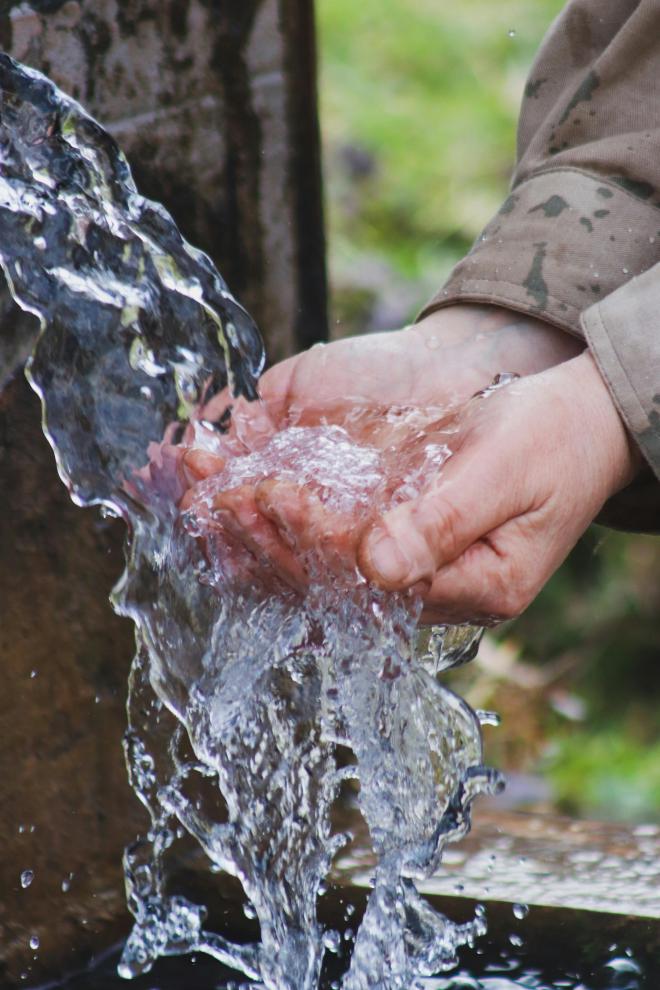
El agua es polar: el átomo de oxígeno lleva una ligera carga negativa, mientras que los átomos de hidrógeno son ligeramente positivos. Sin la combinación de estas propiedades en el agua, la vida no existiría, al menos no en su forma actual. La polaridad hace que las moléculas de agua se atraigan entre sí, como imanes débiles. Esta cohesión es la razón por la que el agua es líquida entre 0 y 100 grados Celsius en lugar de gaseosa. Este es el rango de temperatura en la Tierra, determinado por su distancia al Sol. En las condiciones físicas de la Tierra, el agua es el entorno líquido en el que pueden formarse las moléculas de la vida y en el que se aceleran las reacciones químicas en los organismos.
“Esto, a su vez, es un requisito previo para que el ADN almacene información y para que las proteínas adopten una estructura específica”, explicó el químico. El ADN consta de diferentes componentes moleculares que se formaron incluso antes de que surgiera la vida; algunos son polares, mientras que otros son apolares. Los componentes polares interactúan bien con el agua y, por lo tanto, se orientan hacia afuera en un ambiente acuoso, mientras que los no polares se ubican hacia adentro. Esta es una de las razones por las que el ADN adopta una estructura de doble hélice en condiciones naturales, similar a una escalera de caracol donde las barandas polares están en el exterior y los escalones no polares están apilados y retorcidos en el interior.
“Las propiedades emergentes del agua imponen así un cierto orden a las moléculas más complejas”, explicó Schwalbe. “Es como un director de orquesta que se asegura de que los músicos no toquen al azar”. Este orden, a su vez, forma la base para que estas moléculas complejas desarrollen propiedades propias e impredecibles. Es en parte responsable, por ejemplo, para el ADN que consta de dos cadenas entrelazadas. Por lo general, estos se comportan de forma complementaria, como hacer coincidir las piezas de un rompecabezas. Como resultado, el ADN tiene la capacidad de replicarse, lo que significa que puede crear copias de sí mismo. Durante este proceso, las cadenas de ADN se separan y las “piezas del rompecabezas” coincidentes se unen nuevamente a cada cadena. La capacidad de replicarse es fundamental para el surgimiento de la vida.
La evolución de los sistemas complejos no se repetirá exactamente
#
La publicación identifica un total de 13 características de sistemas complejos. Uno de ellos es el fenómeno de que tales sistemas pueden alcanzar estados críticos en los que sus propiedades cambian fundamentalmente a través de la emergencia. Esto habilita repentinamente nuevas funciones. No se puede predecir exactamente cuándo sucederá esto. Estos saltos fueron a menudo pasos clave en el camino hacia el surgimiento de la vida. Para que se produzcan, los sistemas necesitan un aporte constante de energía; en la Tierra, esta proviene del Sol.
**Una fuerza impulsora detrás de este desarrollo son los mecanismos evolutivos, que comenzaron a dar forma a las moléculas incluso antes de que surgiera la vida. Junto con la emergencia, han dado lugar a las diversas formas de vida que observamos hoy en la Tierra. Sin embargo, a pesar de estas fuerzas, el curso exacto de este desarrollo no estaba predeterminado. Schwalbe enfatizó que, si pudiéramos retroceder el reloj cuatro mil millones de años, surgirían formas de vida completamente diferentes a las que conocemos hoy.
El estudio The Role of Chemistry Across Disciplines From Humanities to Life Sciences in Understanding Complexity and Emergence (El papel de la química en disciplinas que van desde las humanidades hasta las ciencias biológicas para comprender la complejidad y la emergencia) fue publicado en Angewandte Chemie International Edition. Autores: Harald Schwalbe, Josef Wachtveitl, Alexander Heckel, Florian Buhr, Sabrina Toews, Thomas M. Schimmer.