


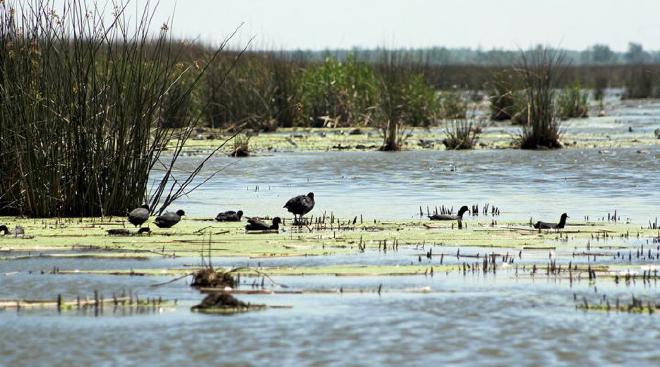
En un proyecto solicitado por la Dirección de Biodiversidad de la Subsecretaría de Ambiente de la Nación, en su carácter de Secretaría Técnica de la Comisión Nacional Asesora para la Conservación y Utilización Sostenible de la Diversidad Biológica (CONADIBIO), en el marco de la elaboración del Séptimo Informe Nacional de Biodiversidad, financiado por el Programa de las Naciones Unidas para el Desarrollo (PNUD).
El proyecto también involucró la firma de un convenio de Asistencia Técnica entre la Asociación Argentina de Ecología (AsAE) y el CONICET y la participación de 15 unidades ejecutoras del CONICET distribuidas en todo el país.
“El resultado es un documento de referencia que cuenta con información organizada en formato de fichas para cada ecosistema, así como material suplementario (planillas con datos geográficos y ambientales y un sistema de información geográfica SIG). Consideramos que el producto obtenido representa un avance significativo para el conocimiento y la gestión de los ecosistemas argentinos”, afirmó Paulina Martinetto, una de las coordinadoras del trabajo e investigadora del CONICET en el Instituto de Investigaciones Marinas y Costeras (IIMyC, CONICET – UNMDP).
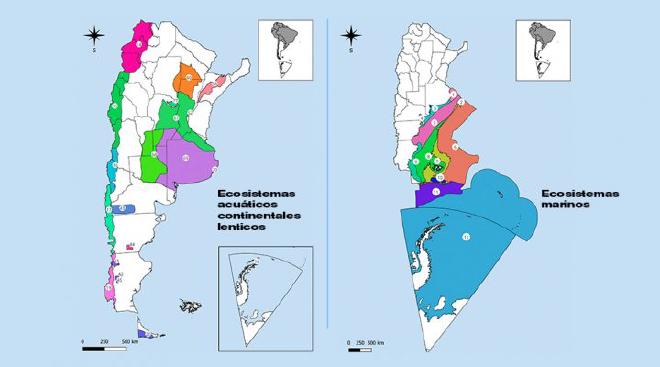
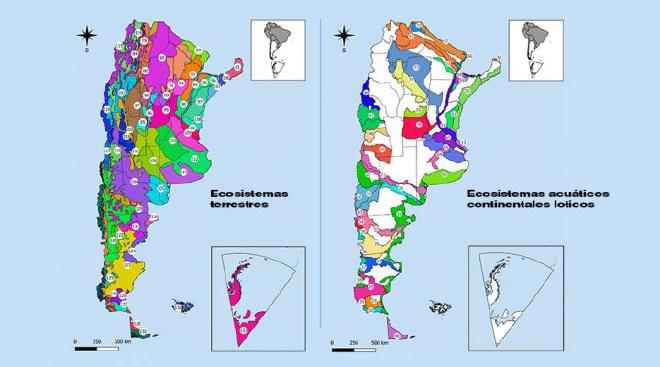
Mapeo y caracterización de ecosistemas argentinos #
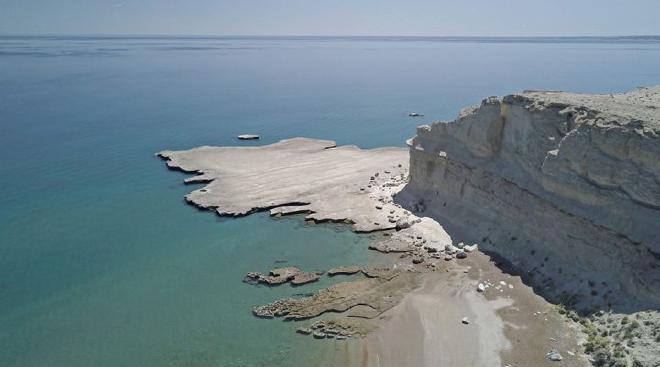
Más allá de la separación en los tres tipos de ecosistemas, la clasificación y descripción fue internamente lo más homogénea posible, y en el formato de una ficha para cada ecosistema. “Cada ficha incluye características geográficas (superficie total, posición geográfica y altitud o profundidad), ambientales (temperatura y precipitación para los terrestres y acuáticos continentales; temperatura superficial del mar y clorofila satelital para los marinos), de la flora y fauna, de conservación (áreas con algún grado de protección) y de uso y apropiación humanas (amenazas y servicios ecosistémicos)”, señaló el informe.
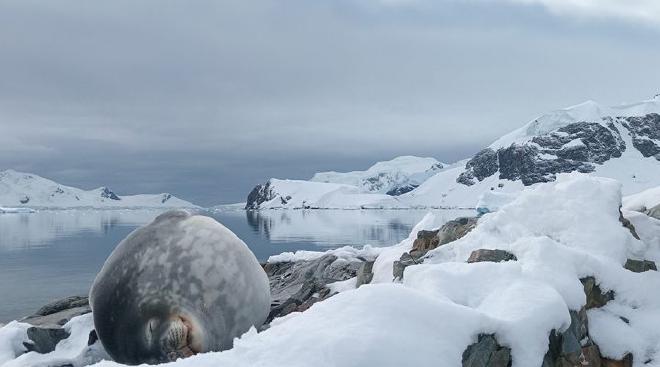
En la actualidad, este trabajo constituye el mapeo y la caracterización más completos y exhaustivos disponibles de los ecosistemas de la Argentina. Las iniciativas análogas disponibles estuvieron especialmente centradas en los ecosistemas terrestres. Todo el material elaborado fue diseñado para el uso por parte de gestores y cumple con la solicitud planteada por la CONADIBIO.
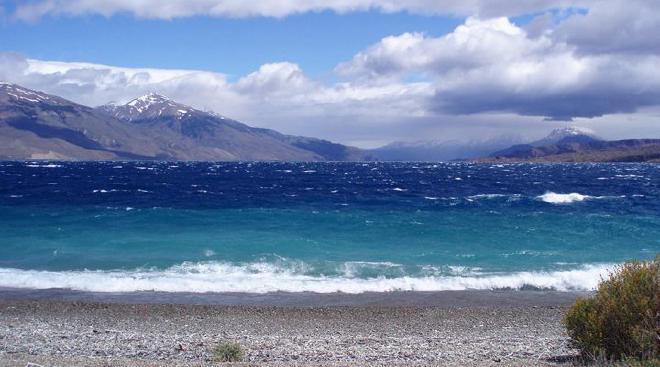
El informe, titulado “Caracterización y mapeo de ecosistemas marinos, acuáticos continentales y terrestres de la Argentina”, detalla los principales servicios que brinda cada ecosistema. Por ejemplo, la albufera (laguna costera de agua salada) de Mar Chiquita, declarada Reserva Mundial de la Biosfera en 1996, brinda servicios de aprovisionamiento como la pesca artesanal, además de regulación hídrica y climática, y valores culturales vinculados a la educación. El ecosistema del caldenal aporta alimento para el ganado, además de regulación hídrica, control de la erosión, y cumple funciones de soporte como la formación de suelo.
“Por primera vez, Argentina cuenta con una base integrada y estandarizada sobre sus ecosistemas, construida de manera colaborativa por más de 50 especialistas de todo el país. Este logro ofrece una herramienta estratégica para conservar la biodiversidad, planificar el territorio y evaluar impactos ambientales a la vez que tiene utilidad en el ámbito educativo ilustrando la diversidad de los ecosistemas en todo el territorio nacional”, indicó Martinetto. Y concluyó: “La experiencia de este trabajo demuestra la capacidad de la comunidad científica argentina para trabajar unida frente a grandes desafíos, y resalta el papel fundamental de las asociaciones científicas. En este caso, la AsAE tuvo un rol clave al reunir profesionales de distintas disciplinas y ecosistemas, enriqueciendo el proceso y garantizando un producto de alta calidad en tiempo récord”.
Cita #
- El estudio Caracterización y mapeo de ecosistemas marinos, acuáticos continentales y terrestres de la Argentina 2025. Informe final de la consultoría solicitada por el Programa de las Naciones para el Desarrollo (PNUD), la Dirección de Biodiversidad (SSA-MTAyD) y CONADIBIO. Asociación Argentina de Ecología. 456 páginas. MO, II, PM, LE, MLS y MV contribuyeron igualmente al trabajo, 2 https://orcid.org/0000-0002-5657-4420 , 3 https://orcid.org/0000-0001-5986-2674 fue divulgado en ORCID. Autores: Oyarzabal, M.1, I. Izaguirre, P. Martinetto, L. Enrico1, M. L. Sánchez, M. Valiñas, E. Balseiro, O. Iribarne, M. Oesterheld, M. Acha, M. R. Aguiar, V. Alder, D. Alemany, L. Allende, F. Alvarez Dalinger, M. R. Aragón, I. Barberis, C. Bessa, F. Biganzoli, F. Botto, C. Brand, M. Cabido, S. Casco, D. Cataldo, A. Cuchietti, M. Devercelli, C. Feijoó, J. L. Fontana, M. Forastier, G. García, M. Gayol, M. V. Lencinas, E. J. León, R. E. Lorenzón, V. Lozano, B. Modenutti, L. Moraña, D. Moreira, I. O´Farrell, M. S. Porcel, C. S. Ramos, P. Rivadeneira, S. Roig, V. L. Romero, M. Salusso, M. Saraceno, M. Saraceno, L. Scenna, M. R. Schiaffino, E. Verón, y P. Villagra.
Contacto [Notaspampeanas](mailto: notaspampeanas@gmail.com)