


  1. Posts/

Brazilian scientists use ultrasound to destroy influenza A and COVID-19 viruses without damaging human cells

·4 mins·
Notaspampeanas
Virology Influenza COVID 19 SARS-CoV-2 H1N1 Viral Infections Zika Dengue Chikungunya Brazil University of São Paulo Flávio Protásio Veras Odemir Martinez Bruno Scientific Reports
Notaspampeanas
Author
Notaspampeanas
Digging on curiosity and science.
Table of Contents

Researchers at the University of São Paulo (USP) in Brazil have discovered that high-frequency ultrasound waves similar to those used in medical exams can eliminate viruses such as SARS-CoV-2 and H1N1 without damaging human cells. In an article published in Scientific Reports, they described how the phenomenon, known as acoustic resonance, causes structural changes in viral particles until they rupture and become inactivated.

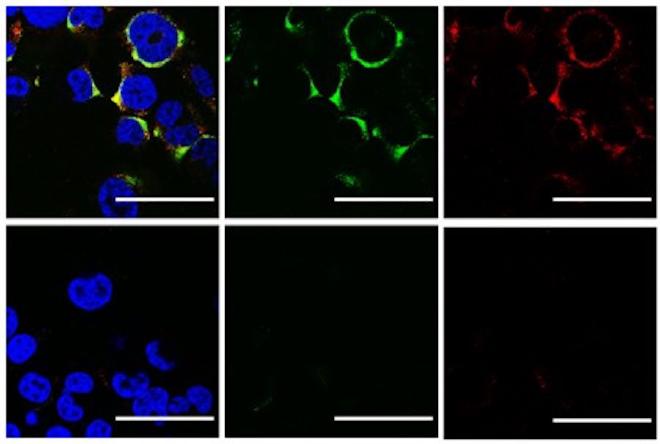
Above, experimental control; below, the virus-eliminating effect of ultrasound (Image credit: Flávio Protásio Veras et al./Scientific Reports)

“It’s kind of like fighting the virus with a shout. In this study, we proved that the energy of sound waves causes morphological changes in viral particles until they explode, a phenomenon comparable to what happens with popcorn. By degrading the structure of the pathogen, the protective membrane of the virus [called the envelope] bursts and deforms, preventing the virus from invading human cells,” explained Odemir Martinez Bruno, a professor at the São Carlos Institute of Physics (IFSC) at USP who coordinated the study.

Ultrasound-mediated inactivation of enveloped viruses opens up a new treatment possibility for viral diseases. In fact, the team is already conducting in vitro tests against other infections, such as dengue, Chikungunya, and Zika. This alternative treatment is particularly interesting given that antiviral drugs are generally difficult to develop.

“Although it’s still far from clinical use, this is a promising strategy against enveloped viruses in general, since developing chemical antivirals is complex and yields difficult results. Furthermore, it’s a ‘green’ solution, as it generates no waste, causes no environmental impact, and doesn’t promote viral resistance,” said Flávio Protásio Veras, a professor at the Federal University of Alfenas (UNIFAL) and a FAPESP postdoctoral fellow. FAPESP funded the work through projects 20/05601-6, 23/07241-5, 13/08216-2, 19/26119-0, 18/22214-6 and 21/08325-2.

The research brought together scientists from various fields. In addition to theoretical physicists and acousticians from the IFSC, the initiative benefited from the collaboration of specialists from the Virology Research Center and the Center for Research in Inflammatory Diseases (CRID), both affiliated with the Ribeirão Preto Medical School (FMRP-USP), the School of Pharmaceutical Sciences (FCFRP-USP), and the Faculty of Science and Technology at São Paulo State University (UNESP). These specialists contributed structural and toxicological analyses using techniques such as microscopy and light scattering.

The initiative also benefited from the collaboration of Charles Rice, a professor at Rockefeller University in the United States and the 2020 Nobel Prize winner in medicine. Rice provided fluorescent viruses for real-time visualization.

It’s the geometry
#

The discovery surprised the researchers because it contradicts classical physics theories, as the wavelength of ultrasound is much longer than the size of the virus. In theory, this difference in size would prevent interaction.

“The phenomenon is entirely geometric. Spherical particles, such as many enveloped viruses, absorb ultrasound wave energy more effectively. It’s that accumulation of energy inside the particle that causes changes in the structure of the viral envelope until it ruptures. Therefore, if viruses were triangular or square, they wouldn’t undergo the same ‘popcorn effect’ of acoustic resonance,” Bruno explained.

He also points out that since the process depends strictly on the shape of the viral particle and not on genetic mutations, variants such as those observed during the pandemic (Omicron and Delta, for example) do not affect the effectiveness of the technique.

Frequency adjustment
#

“The technique isn’t intended for decontamination. That already exists. Ultrasound is already used to sterilize dental and surgical equipment, but it works through a different physical phenomenon called cavitation, which destroys biological material,” Bruno said.

He explained that acoustic resonance and cavitation differ mainly in the frequency used and their effects on viruses and cells. “While cavitation occurs at low frequencies and destroys both viruses and tissues through the collapse of gas bubbles, acoustic resonance operates at high frequencies [3–20 MHz],” he noted.

https://agencia.fapesp.br/57968

Regarding acoustic resonance, Bruno explained that sound energy couples with the viral structure, exciting internal vibrations that lead to the mechanical rupture of the viral envelope without altering the temperature or pH of the medium. “The result is a selective and safe mechanism since only the virus absorbs the energy and is destabilized, posing no risk to human cells,” he added.

Another scientific article published in the Brazilian Journal of Physics describes the theoretical basis behind the phenomenon of popping enveloped viruses like popcorn.

Citation
#

  • The study Ultrasound effectively destabilizes and disrupts the structural integrity of enveloped respiratory viruses, was published in en Scientific Reports. Authors: Flavio P. Veras, Gilberto Nakamura, Marcelo A. Pereira-da-Silva, Gilia C. M. Ruiz, Carlos J. L. Constantino, Ronaldo Martins, Eurico Arruda, Fernando Q. Cunha & Odemir M. Bruno

  • The article Scientists use ultrasound to destroy influenza A and COVID-19 viruses without damaging human cells, signed by Maria Fernanda Ziegler was published in Agência FAPESP’s website


Contact [Notaspampeanas](mailto: notaspampeanas@gmail.com)


Related

Brazil has lost 1.4 billion tons of soil carbon due to the conversion of natural areas to agriculture
·5 mins
Notaspampeanas
Soil Carbon Forests Carbon Emissions Agriculture Brazil
CONICET scientists find a new 70-million-year-old reptile in Argentine Patagonia
·6 mins
Notaspampeanas
CONICET Paleoteius Lakui MACN Federico Agnolin Martín Ezcurra Paleoteius Late Cretaceous Argentine Patagonia National Geographic Society Paleontology Laboratory of Comparative Anatomy and Vertebrate Evolution Argentine Museum of Natural Sciences Río Negro Scientific Reports Allen Formation Yacimiento De Salitral Ojo De Agua Fundación Félix De Azara Gondwana Pangaea Scincomorpha High-Performance Computing Center National University of Cordoba
FIL researchers discover an energetic “strategy” of the brucellosis bacteria to optimize its multiplication
·5 mins
Notaspampeanas
FIL CONICET Molecular and Cellular Microbiology Laboratory Microbiology Brucella Scientific Reports Mur Fur4
Eos.org: Plastic Debris Helps Oil Residues Reach Farther Across the Ocean
·6 mins
Notaspampeanas
Atlantic Ocean Plastic Debris Oil Spill Palm Beach Plastics Brazil
Garlic-derived compound shows potential to improve muscle health during aging
·5 mins
Notaspampeanas
Health Medicine Aging Populations Life Sciences Biochemistry Metabolism Muscle Tissue Bioengineering
Peruvian indigenous have a digestive superpower; researchers think it may be linked to potatoes
·6 mins
Notaspampeanas
Anthropology Culture Anthropology Evolution Food Digestion Peruvian Andes Potatoes AMY1 Latin American Biological Sciences Earth Sciences