


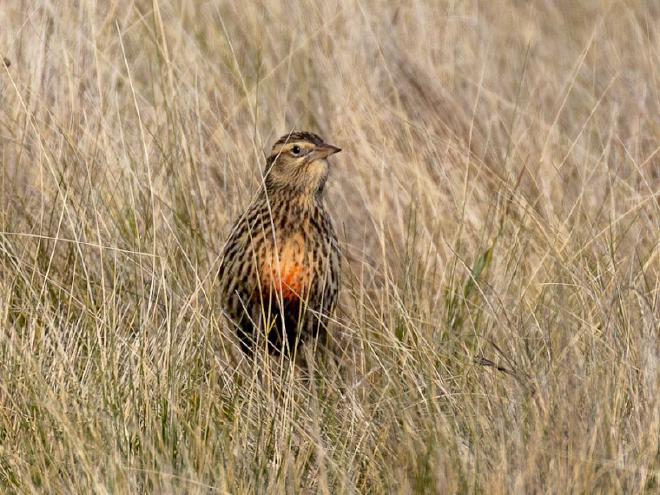
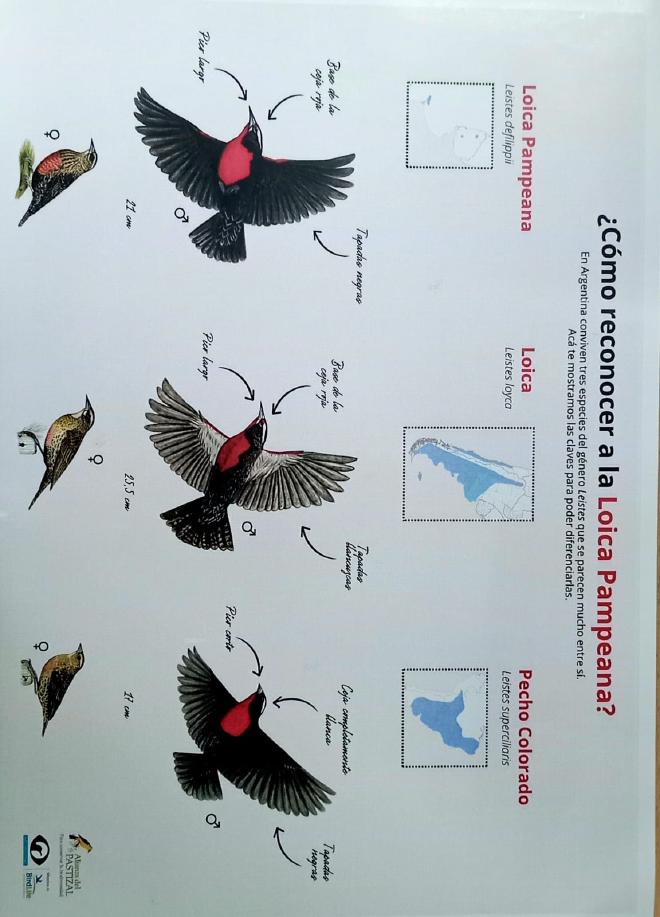
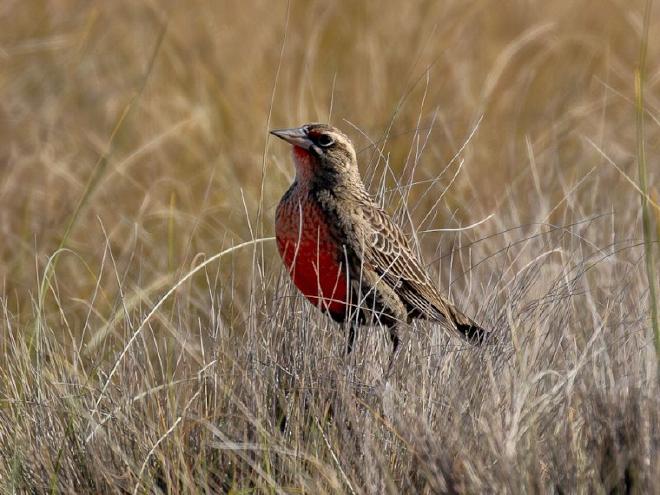
The Loica Pampeana Project seeks through research, field work, environmental education and alliances with different key actors, to improve the conservation status of the Pampas Meadowlark (Leistes defilippii), an emblematic species of natural grasslands that today faces a critical situation.
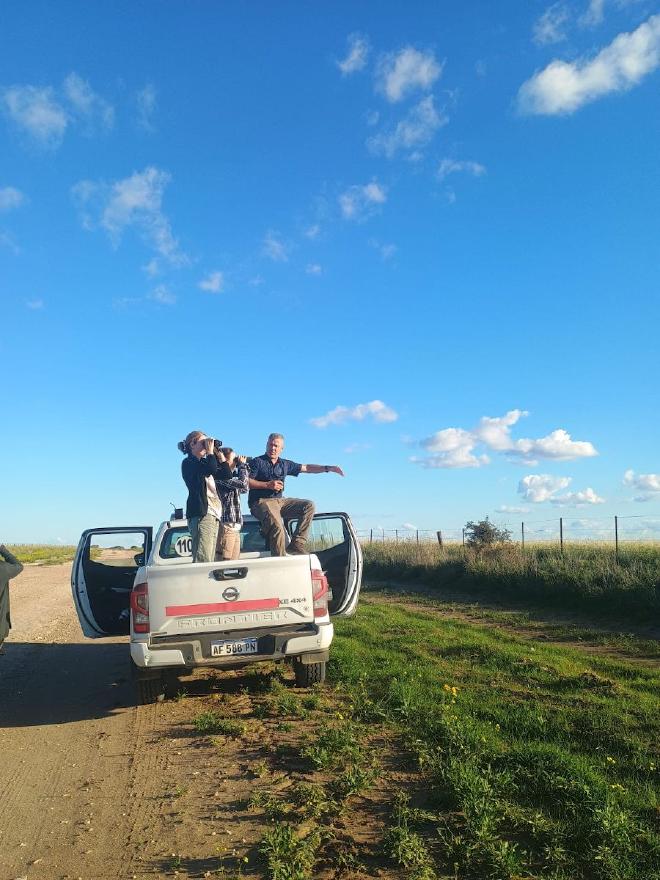
The expedition traveled through various sectors of the southeast of La Pampa with the aim of finding specimens of Loica pampeana and analyzing the presence or absence of the species in places where there are historical records. Recognizing the areas where the populations of Loica Pampeana are currently distributed in the country is essential for their conservation.
A species in decline #
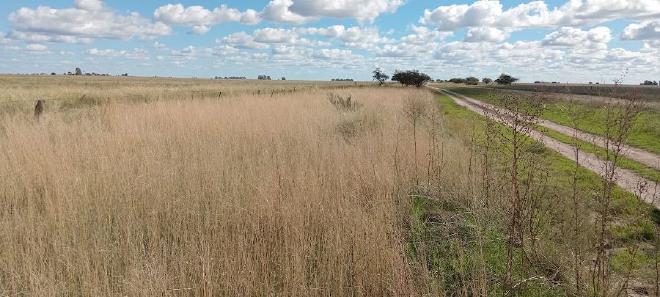
The Loica Pampeana is a bird endemic to the grasslands of the Southern Cone. Historically, its presence was common throughout the Pampas Region of Argentina, the fields of Uruguay and southern Brazil. However, its population suffered a drastic reduction, being limited to a few stable flocks in the southwest of Buenos Aires and northern Uruguay.
It is currently categorized as ’endangered’ in the country. The main threat is the modification and fragmentation of its original habitat, since the natural grasslands coincide with the areas of greatest productive activity in Argentina.
Neyra stressed that even historical chronicles, such as the documents of the so-called Desert Campaign, mentioned ’enormous flocks’ that covered the landscape, “a reality that is far from the present,” commented the *deputy director of Fauna, Federico Pelizzari. ‘In La Pampa -he said to the APN-, the situation is similar: its usual presence has diminished, being reduced to isolated records in the southeast and northwest of the Province, these data, require urgent reconfirmation for the design of protection strategies.’
The Results of the Campaign #
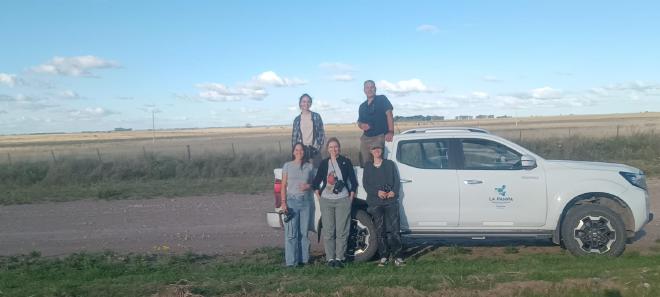
“This result underscores the fragility of the species in La Pampa territory and reinforces the need to continue with the tasks of: Research and fieldwork, education and strategic alliances with key actors in the productive sector,” said Marcelo Dolsan, one of the technicians of the Directorate, who was part of the monitoring campaign together with Cynthia Baumgaertner. In turn, he added that “recognizing the current distribution areas is a fundamental step to avoid the extinction of this jewel of our grasslands.” Finally, he maintained that “cooperation and joint work between public and private organizations is essential to guarantee the conservation of those species that present conservation problems.”
Contact [Notaspampeanas](mailto: notaspampeanas@gmail.com)