


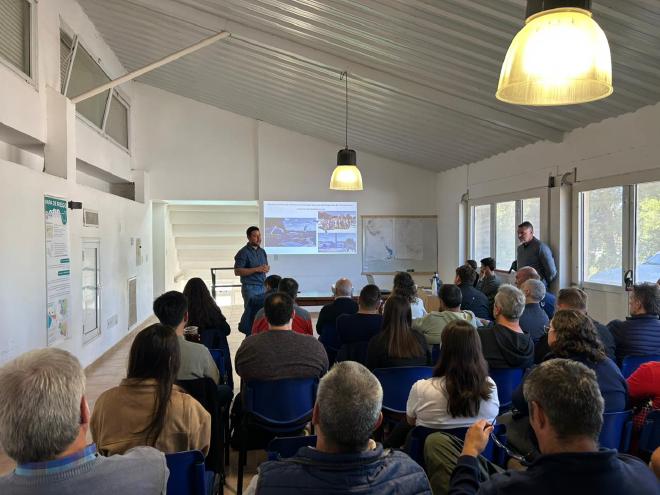
The meeting brought together provincial agencies, municipalities, operating companies, volunteer firefighters and representatives of Neuquén and Río Negro, as well as entities such as the Interjurisdictional Committee of the Colorado River and the Provincial Entity of the Colorado River.
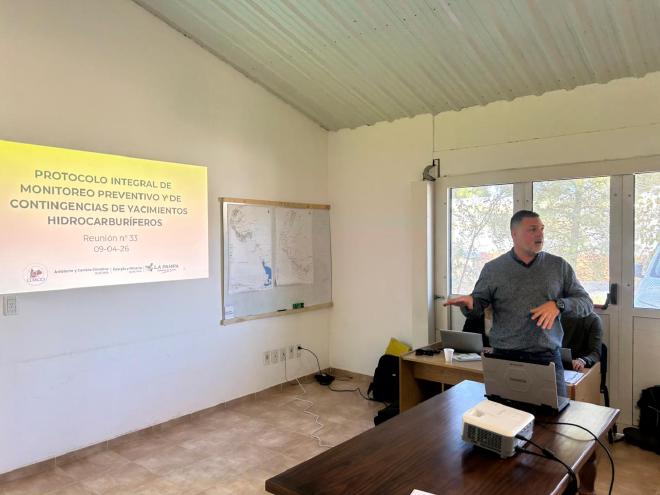
The meeting began with an introduction by the Director of Mining and Inspections, Cristian Buss, who reviewed the work carried out during the seven years of validity of the protocol and the objectives for the current year.
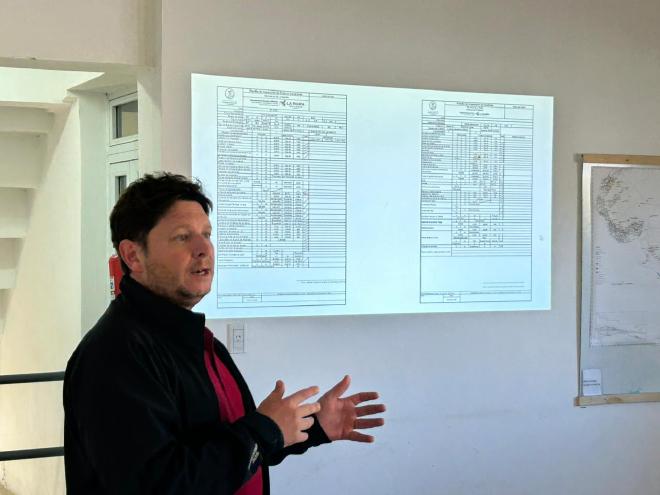
Amendments to the Glacier Law #
The provincial environmental area warned that the regulatory changes may have direct consequences on the basin, especially in riverside towns such as 25 de Mayo. In this sense, it was remarked that a significant part of the flow of the Colorado River comes from melting areas, which makes the protection of glacial systems strategic. Currently, more than 65% of the population of La Pampa depends on this river for the supply of drinking water, in addition to its role in the productive development of the region.
In addition, Civil Defense teams presented the provincial fire map and the prevention actions underway, while the Volunteer Firefighters of 25 de Mayo reported on the training carried out to respond to emergencies.
As the provincial government promotes from its application, together with operating companies and institutions, a sustained policy based on prevention and continuous improvement of response capacity. In this context, the highly complex drills carried out in the Colorado River and in the Casa de Piedra system stand out, with spill containment and recovery exercises in 25 de Mayo, Colonia Gobernador Ayala and Lago Casa de Piedra.
Contact [Notaspampeanas](mailto: notaspampeanas@gmail.com)