


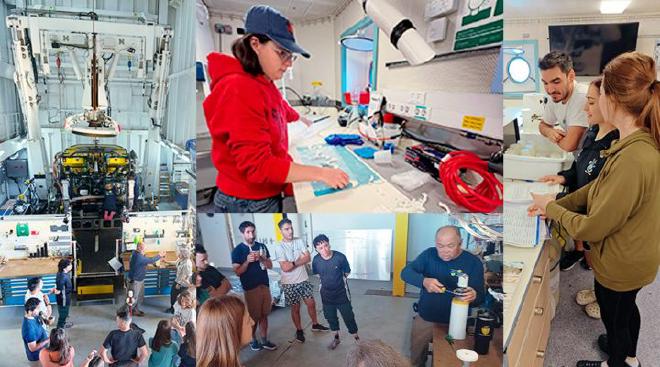
A group of scientists from CONICET, together with colleagues from the Faculty of Exact and Natural Sciences of UBA and abroad, is carrying out a new campaign in the Argentine Sea, aboard the RV ship Falkor (too), belonging to the Schmidt Ocean Institute (SOI), with the aim of studying the most extreme and least explored ecosystems of the seabed. These are chemosynthetic communities: organisms that survive in the deep ocean – where sunlight does not reach and photosynthesis is unfeasible – through the consumption of chemical energy from methane gas seeps (cold seeps) emanating from areas of the seabed.
The project was selected along with seven others, among numerous national and international proposals, and after the evaluation of international juries and members of the SOI. *Among the eight expeditions chosen to explore the Southwest Atlantic Ocean, three are led by Argentine scientists. As already happened with the campaigns ‘Echoes of two Cannons’ and ‘Underwater Oases of the Mar del Plata Canyon: Continental Slope IV’, during the expedition, which will last from December 14, 2025 to January 10, 2026, live streaming will be carried out. To follow the broadcasts click on the link.
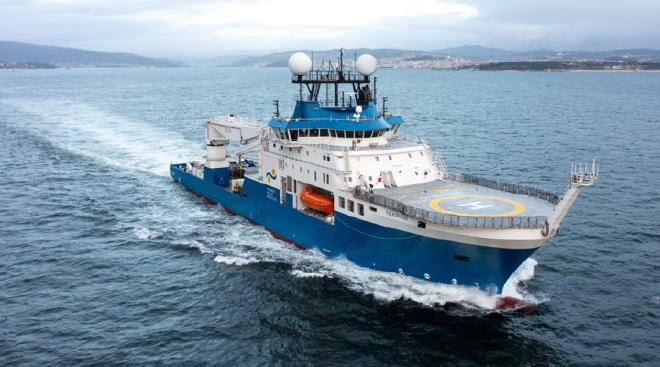
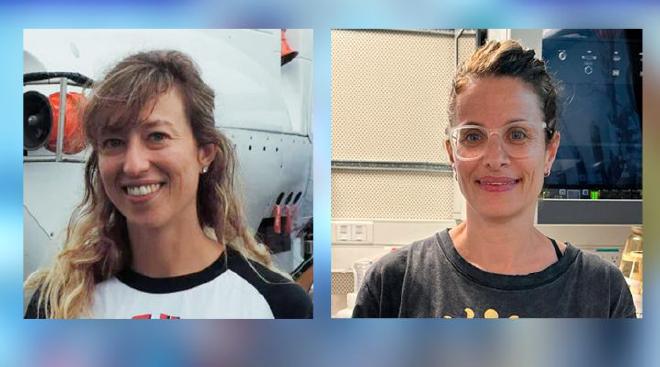
The chief scientist and principal investigator of the ‘Life in the Extremes’ campaign, María Emilia Bravo, is a CONICET researcher at the Institute of Basic, Applied and Environmental Geosciences of Buenos Aires (IGeBA, CONICET-UBA), while one of the co-principal investigators is Melisa Fernández Severini, CONICET researcher at the Argentine Institute of Oceanography (IADO, CONICET-UNS).
Studying chemosynthetic ecosystems #
Although methane gas seeps create extreme and harmful environments for most forms of life, chemosynthetic communities find their livelihood in them. Composed mainly of bacteria, archaea and the associated benthic fauna, these organisms are located at the base of the food chain by acting as primary producers capable of nourishing themselves on inorganic compounds. It is estimated that these various organisms can consume and trap up to 80% of the gas before it escapes into the ocean and atmosphere. These organisms live freely on the bottom or as animal symbionts, to which they transfer the chemical energy they synthesize from seafloor gases. The benthic fauna that thrives in these seeps is usually made up of tubeworms, clams, mussels, and highly specialized microorganisms and bacteria.
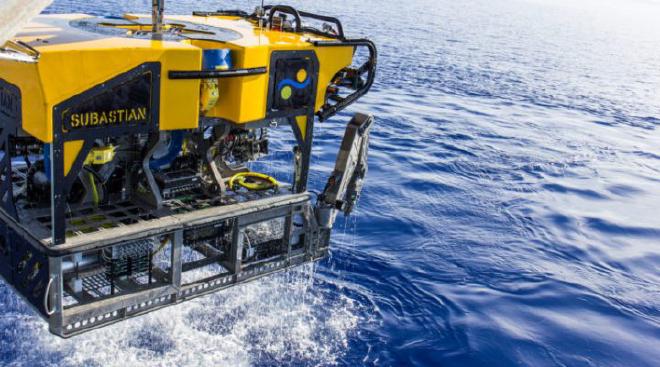
In previous campaigns, carried out aboard the CONICET ship ARA ‘Austral’ in 2018, 2019 and 2022, Bravo along with other members of the team participating in the expedition found the first chemosynthetic ecosystems on the slope of the Argentine Sea. Now the idea is to explore them using the technology of the SuBastian ROV, an underwater vehicle that is operated remotely and can reach up to 4,500 meters deep. Through this state-of-the-art tool, samples of water, sediments and organisms will be taken. All the dives will be livestreamed. The SuBastian ROV work, which will be submerged at least fifteen times, will be complemented by CTD (conductivity, temperature and depth) measurements, zooplankton sampling networks and acoustic mapping systems and high-resolution images of the seabed, in order to be able to characterize these deep-sea ecosystems in detail.
Background and objectives #
In Argentina, chemosynthetic ecosystems were found first on the coast, in the Bahía Blanca estuary, and then in the deep sea through the campaigns carried out aboard the ARA Austral.
“In those oceanographic campaigns, we studied these life forms through the use of a box core, a metal box that descends from the ship to the bottom and brings with it an intact cut of the surface section of the bottom. Using this technology, although we can quantitatively study the biodiversity associated with gas filtration, it is insufficient to cover the biological and environmental complexity of these ecosystems. For each campaign, we obtained a maximum of two samples within a site without gas leaks and a site with gas leaks, in order to compare the biodiversity of the benthic invertebrate communities, as well as the chemical signals of the feeding of the fauna in each of them. That was the first approach, which helped us to show that there is chemosynthetic fauna associated with gas leaks on our slope,” said Bravo.
“Now we will be able to count on the ROV and the system it offers to visualize the environment with high definition, to find smaller patches of chemosynthetic life forms and other species that are associated with this type of environment. This will help us to understand, in a very detailed and integrated way, how the fauna lives, what the trophic patterns are like in this type of environment and how far the influence of these methane seeps in the sea extends,” said Bravo.
Bravo also highlights that this technology will provide tools to find new manifestations of methane leaks that are not detectable by the acoustic methods they have had so far. “These tools will optimize the approach and the level of understanding of this type of ecosystem, as well as its interaction with the rest of the surrounding deep sea systems,” said the scientist.
Microplastics and chemosynthetic ecosystems #
One of the purposes of the expedition will be to assess the presence of microplastics in water, sediments and organisms, and to determine to what extent these contaminants can affect the dynamics of chemosynthetic communities. For this objective, the work on the high seas of the team led by Fernández Severini at the IADO will be fundamental.
“In addition, we will analyze the dynamics of nutrients, heavy metals and sulfides in the different areas of study, in order to identify possible spatial differences in their concentrations and biogeochemical behaviors,” said Fernández Severini.
Great expectations #
In relation to expectations, Bravo states that the fact that all those who are part of this project are on board means that the previous work of management, administration and coordination was done successfully. “From the moment we are setting sail, the expectation is that we will be able to take full advantage of the technological platform offered by Falkor (Too) to carry out multiple investigations, train future researchers, strengthen international collaborations and be able to transfer the knowledge generated to our society,” the scientist said.
The scientific team carrying out the expedition is made up of 25 people. Among them are scientists from IGeBA, IADO, the Institute of Biodiversity and Experimental and Applied Biology (IBBEA, CONICET-UBA), the Argentine Museum of Natural Sciences (MACN, CONICET*), the Department of Biodiversity and Experimental Biology (DBBE, FCEN, UBA*), the Department of Atmospheric and Ocean Sciences (DCAO, FCEN, UBA), the Scripps Institution of Oceanography – University of California at San Diego, Lehigh University, Temple University and University of the Republic of Uruguay.
The Team #
María Emilia Bravo (Chief scientist), Brenda Doti, Daniel Lauretta, Lucía Álzaga, Luana Yazmin Acosta, Andrea Natalia Álvarez, Maialen G. Ardusso, Ele Beruschi, Juan Cruz Carabajal, Lucía Chesta, Melinda Fernández Severini, José Isola, Lisa Levin, Danya Awshah, Siara Mitchell, Leonel Pacheco, Florencia Belén Rial, Fabrizio Scarabino, Lisandro Scarrone, Charlotte Seid, Milan Sengthep, Morgan Will, Xenia Barnes, Juliana Giménez, Gino Zamborlini, Ann Duk See Jordan (Artista marina), Misha Vallejo Prut (Multimedia correspondat)
God speed to the researchers #
- The article RV Falkor (too): exploran los ecosistemas más extremos y menos conocidos del fondo del Mar Argentino signed by Miguel Faigón was published today on CONICET’s website
Contact [Notaspampeanas](mailto: notaspampeanas@gmail.com)