CONICET team develops a device for domestic use to remove micro and nanoplastics from water
·4 mins·
Notaspampeanas
Microplastics
Nanoplastics
INTEMA
CONICET
UNMdP
Science of Materials
Technology of Materials
2025 Franco-Argentine Innovation Award
Carla Di Luca
Materials Development
Author
Notaspampeanas
Digging on curiosity and science.
Table of Contents
Table of Contents
In recent years, the detection of micro- and nanoplastics in drinking water has generated growing global concern due to the ability of these particles to enter living organisms and accumulate in tissues, with potential long-term adverse effects. To address this problem, a CONICET research team at the Institute of Research in Science and Technology of Materials (INTEMA, CONICET-UNMdP), located in the city of Mar del Plata, Argentina is developing an innovative household device capable of removing micro- and nanoplastics, which will function as a complement to mains water purification filters. The project, led by scientist Carla di Luca won the 2025 Franco-Argentine Innovation Award.
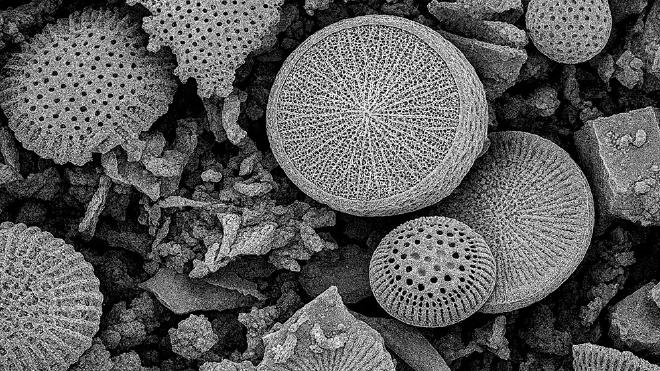
Adsorbent materials developed from the reuse of industrial waste seeking to be used to remove micro and nanoplastics on water. Image courtesy of Carla di Luca.
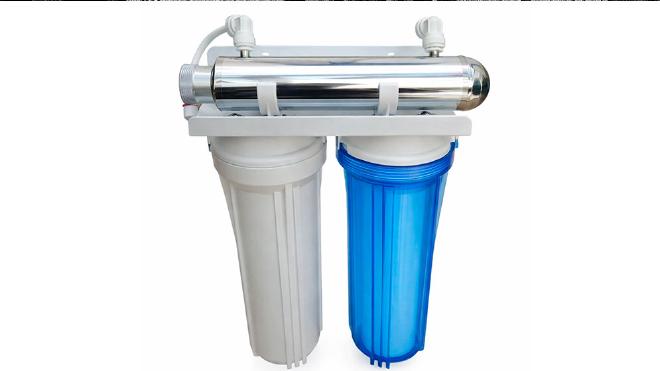
The device being developed at INTEMA combines two stages of water treatment: an initial activation or pre-treatment stage, in which UVC photolysis—a type of high-energy light—prepares micro- and nanoplastics for removal; and a second capture stage, in which an adsorption process is carried out using low-cost materials developed from local industrial waste. The first stage does not attempt to completely destroy or fragment the plastics, but rather to chemically modify their outer surface, making them more “sticky” or more compatible with other materials. In the second stage, the activated micro- and nanoplastics are trapped by porous materials capable of attracting and retaining them efficiently.
Limitations of current purifiers for microplastic filtration
#
In an article signed by Miguel Faigón, CONICET announced that according to di Luca,most of the drinking water treatment systems currently available on the market are designed to remove sediment, bacteria, chlorine, arsenic, or other chemical compounds, but not specifically micro- and nanoplastics. However, these devices, which mostly use activated carbon (GAC) and sometimes activated carbon impregnated with metals like silver, copper, and zinc, can filter some of the microplastics present in the water, but the separation they achieve is primarily physical. “Particles are retained when their size is larger than the pore size of the filter. Their main advantage is that they are relatively inexpensive and easy to install; however, their effectiveness depends on the porosity of the GAC and they are not designed to retain the smallest particles,”Di Luca explained.
The case of nanoplastics is the most complex, because these are particles that measure less than 1 micrometer and can pass through conventional mechanical filters. Therefore, their removal is still in the research stage, and various strategies are being explored.
The researcher pointed out that, on the other hand, so-called membrane technologies, such as ultrafiltration and reverse osmosis, while demonstrating a great capacity to remove high percentages of micro- and nanoplastics, are expensive, consume a lot of energy and water, and, in the case of reverse osmosis, also remove essential minerals from drinking water. In that way, di Luca pointed out that, although total oxidation processes have shown great potential on a laboratory scale to degrade micro- and nanoplastics, their practical implementation is limited by the high energy and reagent consumption.
Schematic of a drinking water purification system that combines UVC photolysis and capture using adsorbent materials. Image courtesy of di Luca et al.
“Compared to existing technologies, the device we are developing offers greater efficiency in nanoplastic removal, lower energy consumption than total oxidation, and reduced costs by using recovered waste,” the researcher said.
Currently the project is in a research and validation stage at laboratory scale, in which preliminary studies are deepened in two main lines: on the one hand, UVC photolysis as a surface activation tool for micro- and nanoplastics, and on the other hand, selective capture using low-cost functionalized materials previously developed by the group from industrial waste.
“We are evaluating removal efficiencies under representative mains water conditions. Our next steps include the design and construction of a prototype, which will allow us to evaluate the performance of the hybrid system under conditions closer to a real-world application,”di Luca said.
If the experimental results continue to be encouraging, the group will seek to advance in increasing the degree of technological maturity of the proposal, as well as in exploring transfer opportunities to companies in the water treatment sector.
“Our expectation is that this line of work can evolve into an innovative, efficient and accessible solution for the mitigation of micro- and nanoplastics in water supply systems,” the researcher concluded.