


There are treatments that reduce its progression, but for now there is no cure for Friedreich’s ataxia (FA), a genetic disease that affects approximately one in every 50,000 people and is characterized by progressive damage to the nervous system and cardiological complications.
Likewise, the laboratory of CONICET researcher Javier Santos, one of the leaders of the advance, received an international subsidy from the Friedreich’s Ataxia Research Alliance (FARA) to continue advancing this line of work.
Nanoantibodies generated in camelids #
The main characteristic of Friedreich’s ataxia is an alteration in the genes that limits the manufacture or results in the production of functionally defective forms of frataxin that is in the mitochondria (metabolite and cofactor factories and energy plants of the cells).
In addition, the research group is developing very special variants of these nanoantibodies with international support.
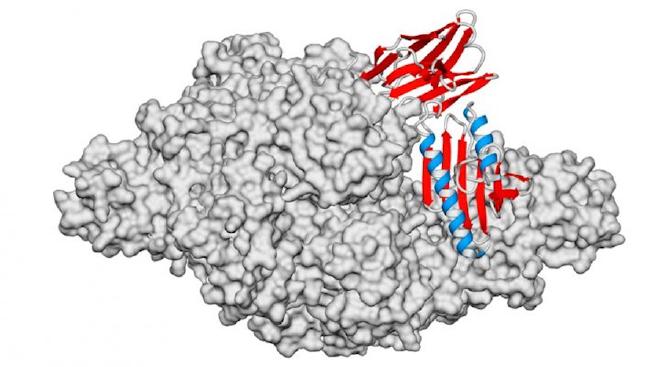
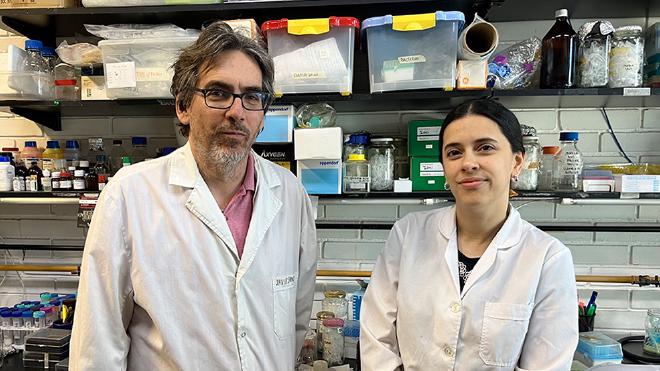
“The nanoantibodies that we will use in the continuation of this work are small molecules derived from antibodies manufactured by the immune system of camelids. They have the ability to penetrate cell membranes, locate in mitochondria and stabilize defective frataxin proteins,” explains María Florencia Pignataro, first author of the work and CONICET researcher at iB3. “Nanoantibodies constitute a useful and versatile tool to interact with proteins within the cell due to their small size and high affinity.” she adds.
Along these lines, Santos states that “another interesting aspect of our research is that we observed that the expression of nanoantibodies and their mitochondrial localization does not affect certain cellular variables such as viability, cellular respiration and other functions. This information is encouraging if we think about possible therapies based on nanoantibodies.”
For Itatí Ibáñez, co-leader of the work and CONICET researcher at the Institute of Physical Chemistry of Materials, Environment and Energy (INQUIMAE, CONICET-UBA), “the small size of the nanoantibodies allows a single gene therapy vector to carry several of them or incorporate multivalent formats, which represents a significant advantage over other therapeutic molecules.”
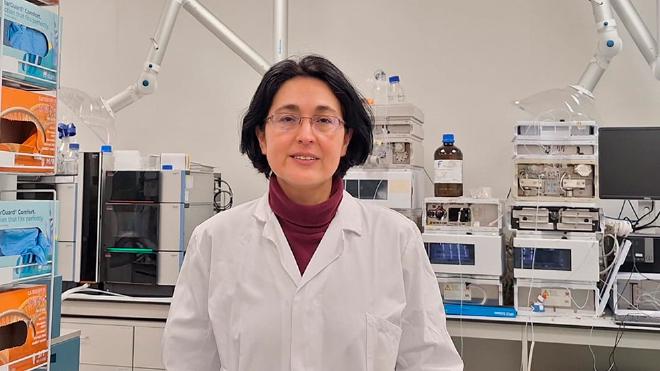
Furthermore, states the researcher, “nanoantibodies can be modified very easily to favor their penetration into tissues and cells, thus expanding their potential and facilitating their application as therapeutic agents. It is a highly versatile tool, with a growing interest in both biotechnology and clinical applications and with a lot of potential to be developed as medicinal specialties for Friedreich’s ataxia.”
To obtain cells from patients, the research team maintains a collaboration with the Italian Hospital of Buenos Aires, with doctors Diego Santoro, Marcelo Ielpi and Leandro D. Burgos Pratx, coordinators of the Biobank. Likewise, they worked in cooperation with the laboratory of Juan Antonio Hermoso at the Institute of Chemistry-Physics “Blas Cabrera”, in *Madrid, Spain.
Also participating in the work were: Antonella Vila, Hernán G. Gentili, Natalia Brenda Fernández, Alba Garay-Álvarez, Naira Antonia Rodríguez, Augusto E. García y Julián Grossi, from iB3 and the Department of Physiology, Molecular and Cell Biology (DFBMC, FCEN-UBA); María Florencia Pavan, from INQUIMAE; Martín Noguera, from “Prof. Alejandro C. Paladini” Institute of Biological Chemistry and Physicochemistry (IQUIFIB, CONICET-UBA); Martín Aran, from CONICET and the Leloir Institute Foundation (FIL); Rafael Molina, from “Blas Cabrera” Institute of Physical Chemistry; and Inés G. Muñoz, National Cancer Research Center (CNIO), in Madrid, Spain.
Also participating in the work were Antonella Vila, Hernán G. Gentili, Natalia Brenda Fernández, Alba Garay-Álvarez, Naira Antonia Rodríguez, Augusto E. García and Julián Grossi, from iB3 and the Department of Physiology, Molecular and Cellular Biology (DFBMC, FCEN-UBA); María Florencia Pavan, from INQUIMAE; Martín Noguera, from the “Prof. Alejandro C. Paladini” Institute of Biological Chemistry and Physicochemistry (IQUIFIB, CONICET-UBA); Martín Aran, from CONICET and the Leloir Institute Foundation (FIL); Rafael Molina, from the “Blas Cabrera” Institute of Physical Chemistry; and Inés G. Muñoz, from the National Cancer Research Center (CNIO), in Madrid, Spain.
Citation #
-
The paper Nanobodies as tools for studying human frataxin biology was published in Communications Biology Authors: María Florencia Pignataro, Natalia Brenda Fernández, Alba Garay-Alvarez, María Florencia Pavan, Rafael Molina, Inés G. Muñoz, Julián Grossi, Martín Noguera, Antonella Vila, Augusto E. García, Hernán G. Gentili, Naira Antonia Rodríguez, Martín Aran, Viviana Parreño, Marina Bok, Juan A. Hermoso, Lorena Itatí Ibañez & Javier Santos
-
The article Logran avance clave contra una grave enfermedad genética signed by Bruno Geller was published today on CONICET’s new section
Contact [Notaspampeanas](mailto: notaspampeanas@gmail.com)