


The recent political approval of the Association Agreement between the European Union and Mercosur reactivated a key debate on Argentina’s international insertion and the impact that this understanding can have on regional economies. For La Pampa, the agreement is part of a long-term strategy aimed at consolidating and expanding exports to high-value markets, particularly Europe explained the APN.
Impact on La Pampa #
For La Pampa, the impact of the agreement will be differential depending on the productive sector. Beef, the main exportable product of the province, appears as the item with the greatest potential, although it also concentrates the greatest challenges.
On 2024, La Pampa exports to the European Union reached 3.7 million kilos worth USD 29.1 million, which represented a year-on-year growth of 53% in terms of value. These sales accounted for approximately 16% of the total exported by the province, with a marked concentration in beef, which represented more than 99% of the value exported to that destination.
Beef: reduction of tariffs and key changes with the agreement #
One of the main aspects of the European Union-Mercosur Agreement is the new access scheme for beef, a strategic product for Argentina in general and for La Pampa in particular. Until now, Argentine meat entering the European Union outside the preferential quotas faced tariffs that could exceed 40%, which seriously limited its competitiveness. With the agreement, relevant changes are introduced.
However, the use of these benefits will not be automatic. Effective access will depend on the quota administration mechanisms adopted by Mercosur countries and the ability of companies to comply with the demanding health, environmental and traceability standards required by the European Union.
An agreement that still needs to complete stages #
More Opportunities and challenges #
Beyond meat, the agreement opens up opportunities for other sectors in La Pampa. In beekeeping, the progressive reduction of tariffs could improve the competitiveness of honey, although with strict residue controls and traceability. In cereals and oilseeds, targeted opportunities are foreseen through quotas and gradual tariff reductions.
Indirect opportunities are also identified in knowledge-based services, logistics, certifications and foreign trade, key activities for the effective implementation of the agreement.
Key challenges include adaptation costs for companies, competition for access to quotas, European environmental requirements and possible increased competition from industrial imports from the EU.
International insertion with a provincial perspective #
The European Union-Mercosur Agreement is not an automatic benefit, but a long-term strategic platform. For La Pampa, its use will be linked to the ability to anticipate, public-private coordination and active policies that allow adding value, diversifying exports and mitigating the risks associated with greater trade liberalization.
The international agenda promoted by the provincial government and the I-COMEX La Pampa Agency is part of this objective: to strengthen La Pampa’s presence in strategic markets and generate conditions for productive development with greater external projection.
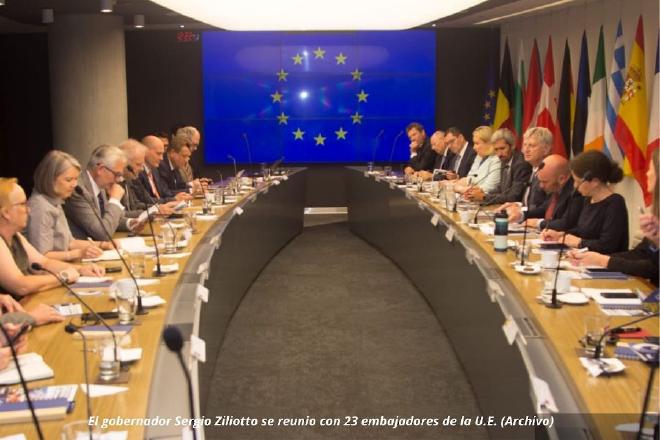
In October 2025, the meeting led by Governor Sergio Ziliotto with the EU ambassador to Argentina and diplomatic representatives of European Union countries, deepened the agenda linked to foreign trade, investments and cooperation, with a special focus on the export potential of La Pampa.
These actions involved La Pampa’s companies from meat, beekeeping, wine and knowledge-based services sectors, with the aim of consolidating the provincial presence in high-value markets, diversifying exports and strengthening a sustained international insertion, concluded the APN report.
Contact [Notaspampeanas](mailto: notaspampeanas@gmail.com)