


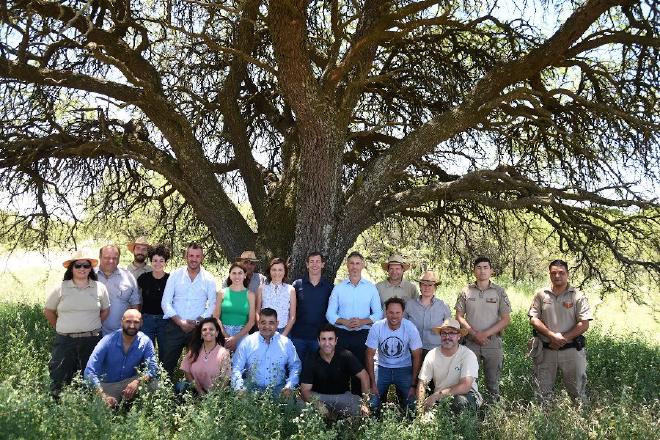
The conservation of the caldén forest, whose largest remaining extension is located in La Pampa, occupies a central place in the environmental agenda of the Province, due to its ecological, social and productive value, and for the strategic role it plays in the environmental regulation of the center of the country.

The La Pampa’s Secretariat of Environment and Climate Change promotes policies aimed at the protection, recovery and sustainable management of native ecosystems, promoting articulated work with other jurisdictions and agencies, and environmental planning based on scientific knowledge and institutional cooperation, stated the APN.
La Pampa signed a collaboration agreement with the Ministry of Environment and Circular Economy of Córdoba and the Secretary of State for Environment and Sustainable Development of San Luis, with the aim of advancing a common strategy for the conservation, restoration and sustainable management of the caldén forest, an endemic environment of Argentina that is present in the three provinces.
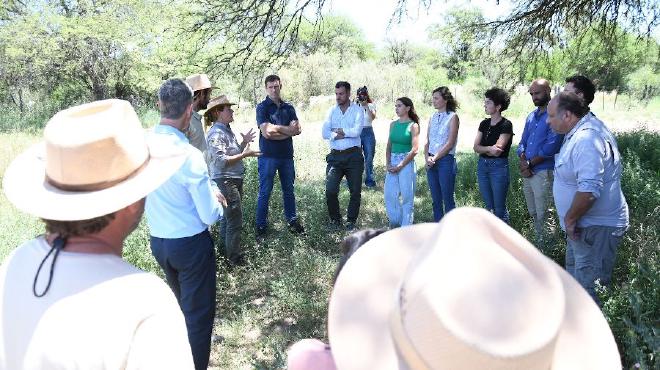
For the province of La Pampa, the agreement was signed by the Secretary of Environment and Climate Change, Vanina Basso, who was accompanied by the director of Biodiversity Conservation and Protected Areas, Martín Zunino.
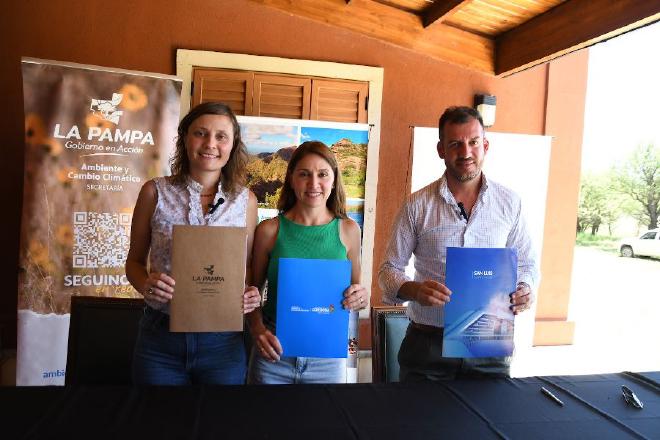
The Minister of Environment and Circular Economy, Victoria Flores, participated for Córdoba, while the Secretary of State for Environment and Sustainable Development, Federico Cacace, participated for San Luis.
The Government of La Pampa highlighted the value of this kind of agreement to address environmental challenges that transcend administrative limits, since this type of ecosystems involve key environmental functions such as water regulation, carbon storage, forage provision and is the habitat of numerous species of native fauna. At the same time, it faces degradation processes that increase the risk of fires and affect its ecological balance, reinforcing the need for planned public policies on a regional scale.
The agreement aims to strengthen joint work in biodiversity monitoring, ecological restoration with local genetic material, the production of caldén specimens, the certification of good productive practices, the operational articulation between technical teams and park rangers, and the implementation of communication and environmental education campaigns aimed at enhancing the value of the Caldenal.
With an initial validity of two years, the agreement reinforces the construction of a regional environmental agenda based on interjurisdictional cooperation, long-term planning and a shared commitment to the preservation of natural heritage, in line with the Sustainable Development Goals and the climate action policies promoted by La Pampa.
The agreement represents a concrete step towards a more integrated environmental governance in the center of Argentina, where the articulation between provinces is consolidated as a key tool to face current and future environmental challenges.
Contact [Notaspampeanas](mailto: notaspampeanas@gmail.com)