


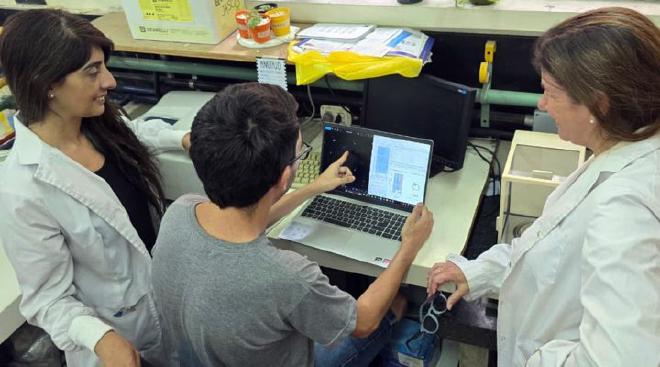
In a work recently published in the journal Communications Biology, a CONICET research team revealed that the multidrug-resistant bacteria Acinetobacter baumannii, a critical pathogen for human health, has a circadian biological clock that is synchronized with daily light cycles.
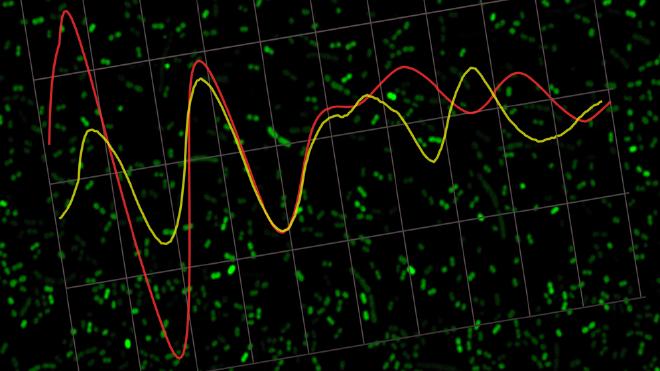
Acinetobacter baumannii is a bacteria known for the nosocomial infections it generates and for being extremely resistant to different families of antibiotics. So much so that most of the strains circulating in hospitals are very difficult to treat, producing high mortality in patients who were often admitted for other pathologies.
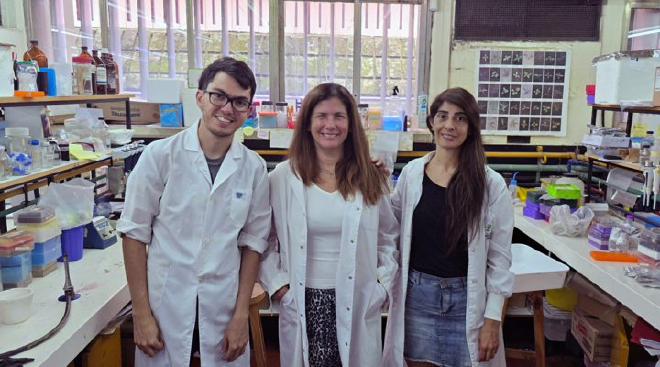
The CEFOBI research group was one of the first to find that this type of chemotrophic bacteria sense light. The big question, according to the researcher, was why and for what purpose. The answer was given by Mussi and his team by demonstrating that both perception and response to light were generalized physiological phenomena of the bacteria, affecting everything from motility to metabolism, including the ability to form biofilms, the way they produce disease and absorb iron, among other issues. “We saw that light regulates global behaviors of the bacteria, and later in collaboration with Diego Golombek and María Laura Migliori, we demonstrated that we are actually talking about a more complex mechanism, such as the synchronization of a circadian rhythm,” she said.
A new temporal dimension from the pathogen’s point of view #
Valentín Permingeat, CONICET doctoral fellow at CEFOBI and first author of the paper, highlighted: “The interesting thing about our work is that it is the first time that it has been shown that these pathogens have a circadian rhythm and this in some way reconfigures how we understand an infection process, because it was a variable that no one had ever taken into account. In fact, there is very little or almost non-existent literature and studies related to these circadian rhythms.”

The contribution of this scientific team is novel knowledge: “Just as at the beginning we showed that these bacteria sense light, now we are showing that they have a circadian rhythm,” stated Permingeat and concluded: “Our research shows that the microorganism behaves differently at different times of the day.”
Furthermore, this research work shows that Acinetobacter baumannii has a biological clock that can be trained by light. This means that when the external stimuli - such as light and dark cycles - that synchronize it disappear, the circadian rhythms that are maintained under constant conditions continue to function. “We then demonstrated that its endogenous rhythm is generated by a biological clock,” Permingeat highlighted.
“We had this hypothesis a long time ago,” highlighted Mussi, and underlined the commitment and effort of the team to be able to develop it. “Achieving these results vindicates the value of young people, that of well-constituted teams, and that of science as well, because this really is a contribution that has not been made anywhere else in the world,” she concluded.
Citation #
- The study The critical human pathogen Acinetobacter baumannii exhibits light-regulated circadian rhythms was published in Communications Biology Authors: Valentín Permingeat, Bárbara Edith Pérez Mora, María Laura Migliori, Natalia Arana, Julia Fernández, María Belén Allasia, Melisa Luciana Lamberti, Gisela Di Venanzio, Ramiro Esteban Rodríguez, Mario Federico Feldman, Diego Andrés Golombek & María Alejandra Mussi
Acknowledgements #
This work was supported by grants from the Agencia Nacional de Promoción Científica y Tecnológica to MAM (PICT 2019-01484), Secretaría de Ciencia, Tecnología e Innovación (Provincia de Santa Fe) to MAM (PEIC I + D 2023-255), and DG (PICT 2021-1051). MAM, RER, BPM, and DG are career investigators of CONICET, while VP and NA are fellows from the same institution. We thank Dr. Ignacio Spiousas (Escuela de Educación, Universidad de San Andrés) for his kind assistance using CircaLuc and data analyses. We also thank Dr. Adrián E. Granada (Universitat Medizin, Berlin, Germany) for his kind assistance using PyBoat and data analyses.
Research Team #
Valentín Permingeat: Centro de Estudios Fotosintéticos y Bioquímicos (CEFOBI, CONICET-UNR).
Bárbara Edith Pérez Mora: Centro de Estudios Fotosintéticos y Bioquímicos (CEFOBI, CONICET-UNR).
María Laura Migliori: Departamento de Ciencia y Tecnología, Universidad Nacional de Quilmes.
Natalia Arana: Centro de Estudios Fotosintéticos y Bioquímicos (CEFOBI, CONICET-UNR)
Julia Fernández María: Instituto de Investigaciones Teóricas y Aplicadas. Escuela de Estadística. Facultad de Ciencias Económicas y Estadística, UNR. Área de Estadística y Procesamiento de Datos. Facultad de Ciencias Bioquímicas y Farmacéuticas (UNR).
Belén Allasia: Instituto de Investigaciones Teóricas y Aplicadas. Escuela de Estadística. Facultad de Ciencias Económicas y Estadística (UNR).
Melisa Luciana Lamberti: Departamento de Ciencia y Tecnología, Universidad Nacional de Quilmes. Gisela Di Venanzio: Department of Molecular Microbiology, Washington University School of Medicine, Saint Louis, MO, USA.
Ramiro Esteban Rodríguez: Instituto de Biología Molecular y Celular de Rosario (IBR-CONICET – UNR).
Mario Federico Feldman: Department of Molecular Microbiology, Washington University School of Medicine, Saint Louis, MO, USA.
Diego Andrés Golombek: Departamento de Ciencia y Tecnología, Universidad Nacional de Quilmes. Laboratorio Interdisciplinario del Tiempo (LITERA), Universidad de San Andrés – CONICET.
María Alejandra Mussi: Centro de Estudios Fotosintéticos y Bioquímicos (CEFOBI, CONICET-UNR).
- The article Revelan que un patógeno bacteriano crítico posee un reloj biológico, signed by Andrea G. Guereta – Comunicación Institucional CONICET Rosario, was published today in CONICET’s website
Contact [Notaspampeanas](mailto: notaspampeanas@gmail.com)