


  1. Posts/

Sei, the unknown whale, a documentary led by biologist Mariano Coscarella

·4 mins·
Notaspampeanas
Biology CONICET Sei Whales Balaenoptera Borealis Chubut Jumara Films National Geographic Pristine Seas Juan María Raggio Mariano Fernández Enric Sala Scott Ressler National University of Patagonia San Juan Bosco
Notaspampeanas
Author
Notaspampeanas
Digging on curiosity and science.
Table of Contents

A documentary based on a research about SEI whales, led by CONICET biologist Mariano Coscarella was presented some days ago.

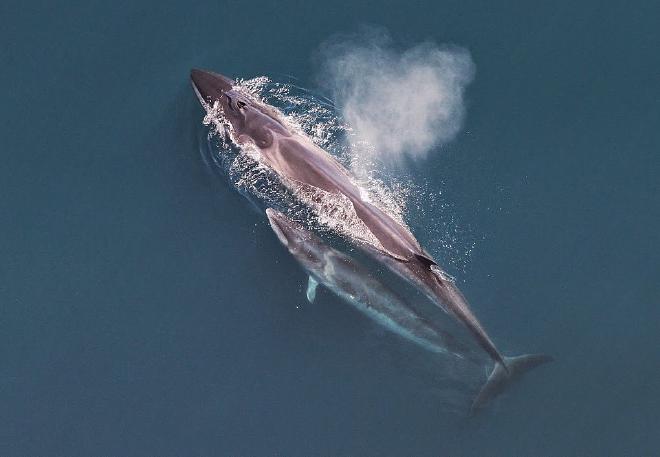
Sei whale (Balaenoptera borealis) mother and calf as seen from the air. Image credit:Christin Khan, NOAA / NEFSC
Sei whale (Balaenoptera borealis) mother and calf as seen from the air. Image credit: Christin Khan, NOAA / NEFSC

The CONICET’s president, Daniel Salamone, participated in the presentation of the production of Jumara Films in collaboration with National Geographic Pristine Seas that documents for the first time the massive arrival of more than 2,500 Sei whales to the Gulf of San Jorge.

At the Cultural Center of Science (C3), Buenos Aires, Argentina, on an auditorium of more than 500 assistants, “SEI, the unknown whale” was presented, a documentary based on the research of the biologist of the National Council of Scientific and Technical Research (CONICET) Mariano Coscarella. Days before, the documentary had been presented in the cities of Rada Tilly and Comodoro Rivadavia, with a call that exceeded a thousand attendees.

The film follows the research led by Mariano Coscarella, who together with an interdisciplinary team of scientists and conservationists studies this unprecedented phenomenon starring the Sei whale, a critically endangered species and so far scarcely studied. Starting from central questions – about their origin, behavior and use of the gulf – the research provides key knowledge to understand and protect this unique population.

Coscarella stated that: “this work is an example of how basic science, sustained over time, can articulate with the private sector, public agencies and the community to develop something that was not foreseen just a few years ago. From years of silent and rigorous research, it was possible to generate key information to think about an orderly conservation model, with local participation and shared learning. The challenge now is to expand the protection of the area to effectively protect whales throughout the Gulf of San Jorge.”


SEI, the unknown whale presents unpublished images, including the first recorded underwater shots of the species, and shows how this scientific discovery is transforming the view of a region historically associated with oil activity, highlighting its extraordinary marine biodiversity.

The research work documented in the film has already had a concrete impact on conservation policy. Among the advances achieved are the declaration of the Sei whale as a Natural Monument in the province of Chubut, the approval of the first management plan for responsible sighting in the area and the expansion of the Punta Marqués Protected Area, measures that strengthen the protection of the ecosystem of the Gulf of San Jorge.

In addition to its scientific and environmental value, the documentary was conceived as an educational tool, aimed at primary and secondary schools, universities and coastal communities. In this framework, new screenings and talks are planned accompanied by the research team, with the support of municipalities, the province of Chubut and the National University of Patagonia San Juan Bosco.

The production, which was made entirely in Argentina, has a duration of 30 minutes and is directed by Juan María Raggio and Mariano Fernández, with executive production by Enric Sala and Scott Ressler.


Applied Science for Conservation and Regional Development
#

In addition to having led the research that inspires ‘SEI, the unknown whale’, biologist Mariano Coscarella also heads a sustainable scientific tourism project on the coast of Golfo San Jorge. Together with colleagues from CONICET and tourism providers from Comodoro Rivadavia and Rada Tilly, Coscarella has documented the seasonal arrival of thousands of sei whales – estimated at about 3,000 specimens between April and June – and is working on the development of responsible sightings that will diversify the local tourist offer with a vision of conservation and generation of scientific knowledge. This effort combines rigorous research with local development, using drones, genetic studies and satellite tracking to understand the phenomenon and collaborate with behavior guides that minimize the disturbance of whales’ behavior in their natural environment.

Contact [Notaspampeanas](mailto: notaspampeanas@gmail.com)


Related

Argentina: new method developed to diagnose endocrine diseases in pediatric patients
·4 mins
Notaspampeanas
Endocrine Deseases CEDIE CIBION CONICET María Eugenia Monge Gabriela Ropelato Dr. Ricardo Gutiérrez General Children's Hospital
Exploring the most extreme and lesser-known ecosystems of the bottom of the Argentine Sea with RV Falkor (too)
·8 mins
Notaspampeanas
Oceanography Argentine Sea Schmidt Ocean Institute RV Falkor (Too) CONICET Faculty of Exact and Natural Sciences Institute of Basic, Applied and Environmental Geosciences of Buenos Aires
Educational Experiences 2025 at the Provincial Museum of Natural History
·2 mins
Notaspampeanas
History Biology Archaeology Culture La Pampa Provincial Museum of Natural History
Ancestral routes: new study redefines the understanding of human mobility in Patagonia
·6 mins
Notaspampeanas
Archaeology Patagonia Hunter-Gatherers Argentina Río Negro Ancestral Routes Navigation Alhue Bay Gavuzzo Federico L. Scartascini CONICET Institute for Research in Cultural Diversity and Processes of Change University of Rio Negro
Criollo App: a tool from INTA to calibrate the sprayer
·3 mins
Notaspampeanas
INTA App Criollo INTA Hilario Ascasubi Juan Pablo D'Amico CONICET Land Sprayers Technology
Stronger forests: key genetics in the face of drought
·4 mins
Notaspampeanas
Conifer Drought Forests Genetics Reforestation Canada United States Argentina INTA CONICET Pinus Contorta Dendrochronology Lodgepole Pine Progeny Trial