


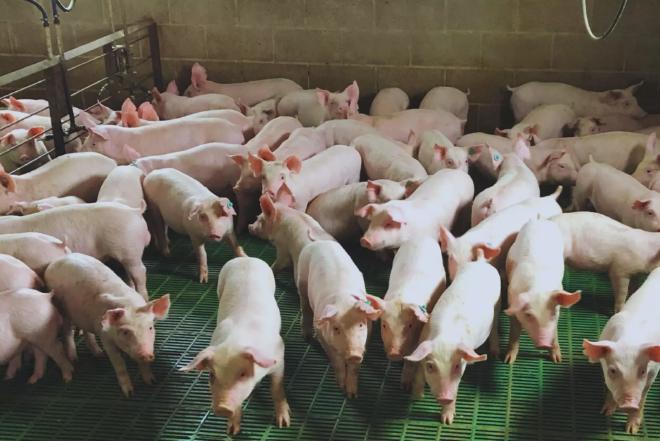
In Córdoba, Argentina, a research by INTA and the Chamber of Pork Producers of Cordoba (Cappcor) showed that pig effluents, applied as an organic amendment, drove productive improvements in soybeans. According to the trials - carried out during eight consecutive campaigns - it went from 2646 to 4574 kilos per hectare, a jump of almost 1900 additional kilos.
“I highlight these three elements because they allow us to synthesize what has been observed: positive changes in macronutrients and also in micronutrients,” said Nicolás Sosa, a professional at INTA Manfredi, who leads the studies together with Diego Mathier and Marcos Bragachini
In that way, the studies showed that the pig effluent acted as an organic amendment capable of integrally improving the soil. “More than a fertilizer that provides one, two or more nutrients, it is a more complete fertilization practice,” Sosa explained.
The main evaluation site operates in the town of Despeñaderos, installed in the Porcal establishment, of the Dos Ríos company, which has 1,600 sows in production. The management system includes the treatment of slurry in three waterproofed stabilization lagoons, filtering by means of a self-cleaning sieve and the subsequent application with a central pivot during the fallow period.
Improved yields #
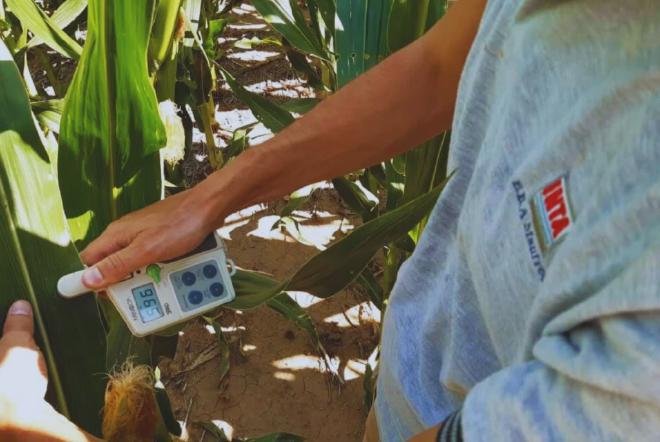
In soybeans, the last campaign showed a marked increase: the control yielded 2646 kg/ha, while the application of 25 mm of effluent without mineral fertilization reached 3830 kg/ha. In the treatments that combined effluent with triple superphosphate, yields reached 3949 and 4574 kg/ha.
“We observed that, in soybeans, there is an additional effect when it is supplemented with mineral phosphorus, even when the soils already have high levels of this nutrient,” Mathier explained.
Corn #
Regarding management recommendations, Sosa stressed that applications should always be made based on a balance of nutrients. This involves considering the nutrient supply of the soil – determined from laboratory analyses – the composition of the effluent and the requirements of the crop in question. “A balance allows us to adjust the application dose and avoid problems, since the demand is not the same for wheat, barley, corn or soybeans,” he said.
Applied research and producers articulation #
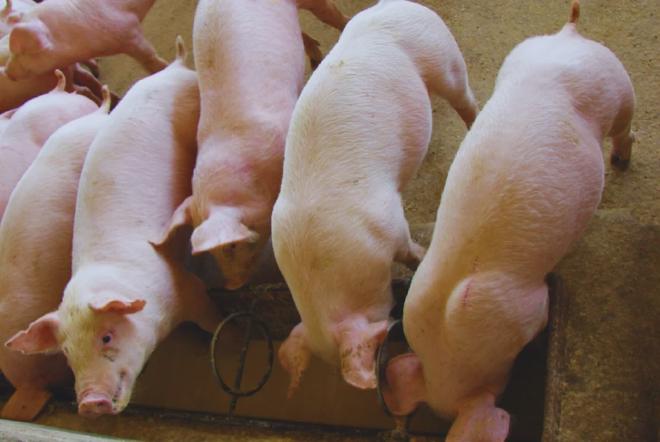
Marcos Torres, a member of the board of directors of CAPPCOR – which brings together 30 establishments and concentrates 50% of the provincial production – referred to the good results obtained by the same line of research of INTA Manfredi in Villa María del Río Seco, in the north of Córdoba.
“In our establishment, in Villa María de Río Seco, in four campaigns we obtained 7,000 kilos more corn per hectare thanks to the addition of pig effluents. Those additional kilos are equivalent to a complete production campaign,” Torres said. “In phosphorus, at the beginning we had values of 40 parts per million. With five years of slurry application, that number rose to almost 65 parts per million.”
Public-private links #
The producer highlighted the value of public-private articulation: “If we had not had the link with INTA, our studies would lack scientific rigor. INTA Manfredi provides us with seriousness and objectivity. It is a benchmark in livestock waste and irrigation systems, which we also use to apply effluents in the field.”
“These trials allow us to lead a line of research in a topic with a lot of demand and with ample potential for study,” said Sosa. “The contribution of information is key for producers to be able to make decisions in their own establishments and avoid management errors, adjusting practices based on the experience generated in the trials,” he concluded.
Citation #
- The article El uso de efluentes porcinos aumenta el rinde de soja was published today in INTA informa
Contact [Notaspampeanas](mailto: notaspampeanas@gmail.com)