


The Minister of Health, Mario Kohan, explained that with this step, “we are in a position to assist patients who suffer an acute ischemic brain event, with a standardized diagnostic-therapeutic approach and with access to a specific drug, tenecteplase, which saves lives and reduces sequelae.”
Kohan recalled that in Argentina a stroke occurs every four minutes and that 85% of cases are of ischemic origin. It is the second cause of death in the elderly and the first cause of permanent acquired disability in adults. However, according to the records, less than 10% of patients access thrombolytic treatment within the appropriate therapeutic window, which is 4.5 hours from the onset of symptoms.
“Every minute without treatment involves the loss of approximately 1.9 million neurons. That is why we say that it is a time-dependent emergency that must be treated within the first hours,” he said.
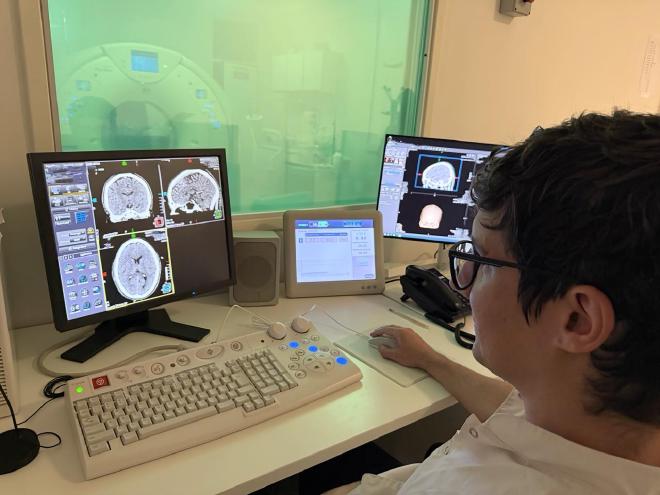
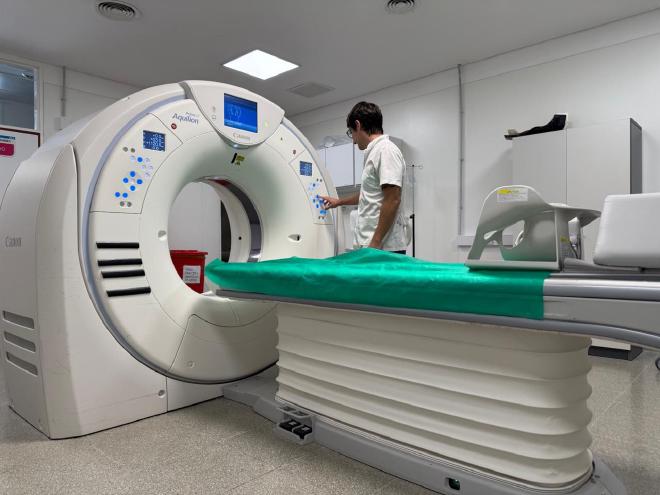
And explained that the approach begins at the first level of care, “where the Health teams, when consulting a patient and in the face of certain symptoms or signs that can be noticed by both the affected person and their relatives, apply the Cincinnati Scale. This tool allows the rapid detection of neurological signs that lead to the diagnosis of ischemic stroke, which can manifest itself with facial asymmetry, alterations in the movement of arms or legs and language difficulties. If the result is positive, the ACV Code 365 is immediately activated and the urgent transfer of the patient to the nearest hospital with a CT scanner begins. In the receiving hospital, which may be the ‘René Favaloro’ Increasing Complexity Hospital in Santa Rosa, the Gobernador Centeno Assistance Center in General Pico, the Padre Buodo in General Acha, the Luisa P. de Pistarini in Victorica, the Jorge Ahuad Hospital in 25 de Mayo and the Virgilio Tedín Uriburu Hospital in Realicó (which works in coordination with the private subsector) a computed tomography of the brain without contrast is performed.”
“Through telemedicine,” he added, “the medical staff contacts a team of neurologists who guarantee on-call 24 hours a day, 365 days a year. With the approval of the specialist, and having confirmed the diagnosis of ischemic stroke, tenecteplase is administered, a high-cost drug that recently entered the country and that is already available in the aforementioned hospitals. The placement of this drug is performed intravenously in 15 seconds to the patient, in the same Healthcare Establishment, always within the therapeutic window of 4.5 hours from the onset of symptoms”.
Kohan stated that with ACV 365 “we are facing a program that replicates the logic of Cardio 365, guaranteeing immediate and specialized care in cases of stroke. We strengthen equity within the Network, all patients are attended, in case the patient is a non-contributor, the Province is responsible for it and in case they have social work, prepaid or are a taxpayer, the corresponding recovery is made. It is a strategy that, supported by telemedicine, allows a response in a territory as large and with low population density as La Pampa. In pathologies where every minute is decisive, having a Provincial Care Network that ensures timely diagnosis and treatment on site is essential to preserve the life and quality of care of our patients.”
Meanwhile, Matías Köhler, a neurologist who is part of the 365 Stroke Program, pointed out that cerebrovascular accident (CVA) “is a tremendously prevalent disease, mainly linked to the pathology of the arteries. Vascular damage is caused by the accumulation of fat and arterial obstruction, a consequence of four major risk factors: high blood pressure, diabetes, dyslipidemia (high cholesterol) and smoking. Each of them, even in isolation, can be enough to trigger a stroke. Prevention requires controlling these chronic diseases and promoting smoking cessation. However, when the event occurs, the most important thing is to recognize the symptoms of sudden onset to consult in a timely manner, which manifest themselves with facial weakness with drooping of the corner of the mouth, loss of strength in the arm or leg on one side of the body, sudden difficulty speaking or understanding. In the event of any of these signs, immediate consultation at the first level of care is essential.”
About the drug used once the diagnosis is confirmed through the tomography, “the thrombolytic treatment, which is received once ACV 365 is activated, with which the clot is dissolved, can only be administered within a maximum window of 4 and a half hours from the onset of symptoms. That is why -Köhler said- we say that time is the brain: every minute lost implies the death of millions of neurons, and that translates into the patient’s quality of life.”
“Tenecteplase, a drug recently incorporated into the country, is today the thrombolytic of choice for the treatment of ischemic stroke. Its efficacy and safety are supported by international scientific evidence, and its administration in a single intravenous bolus allows critical time to be gained in care. The decision to implement it exclusively in the ACV 365 Program optimizes resources, streamlines protocols and guarantees better results for patients,” said Köhler.
Contact [Notaspampeanas](mailto: notaspampeanas@gmail.com)