


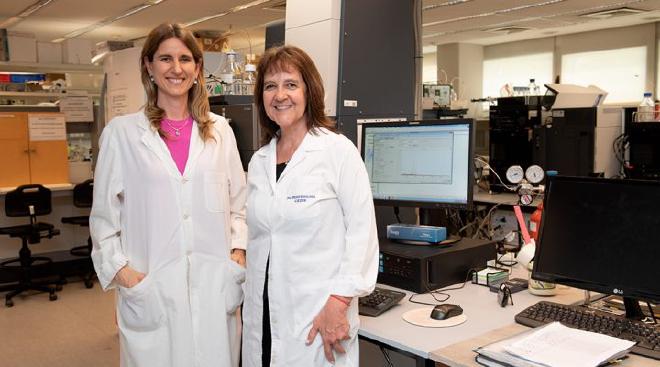
A research team from CONICET developed a sophisticated method to separate, detect and quantify eight steroid hormones relevant to the diagnosis of endocrine diseases, which are synthesized in the adrenal glands and gonads, in infant serum samples. It is a methodology that uses the ultra-high performance liquid chromatography technique coupled with the tandem mass spectrometry technique (UHPLC-MS/MS).
“The method we developed uses only 100 microliters of serum, a quarter of the volume required by immunoassays commonly used in clinical laboratories for the detection of steroid hormones. It should be borne in mind that while immunoassays require the analysis of a sample for each steroid to be quantified, our methodology allows the eight hormones to be quantified simultaneously in a single sample. Even two of the eight steroids that we were able to quantify using this method (pregnenolone and 17-hydroxypregnenolone) cannot be determined in any laboratory in Argentina, since there are currently no accessible commercial immunoassays,” said María Eugenia Monge, CONICET researcher at the Center for Research in Bionanosciences (CIBION; CONICET) and one of the leaders of the development.
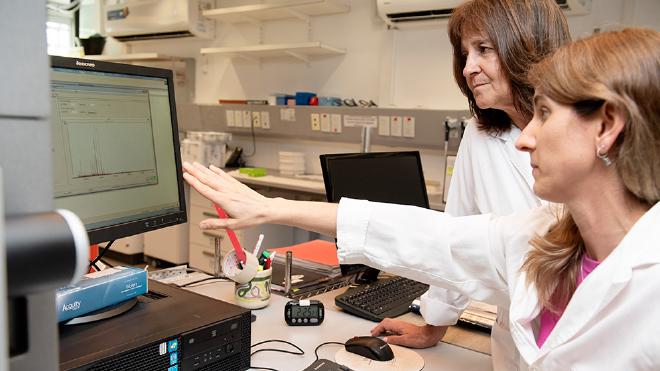
The research team that carried out the development highlighted that this new method has a relevant application in the diagnosis and research of steroidogenesis disorders in children.
“Being able to evaluate which is the synthesis or metabolism pathway of the steroid hormone that is affected allows a more accurate diagnosis to be made and, consequently, to make therapeutic decisions based on scientific evidence,” said Gabriela Ropelato, CONICET researcher at the “Dr. César Bergadá” Endocrinological Research Center (CEDIE, CONICET-FEI – Endocrinology Division, Ricardo Gutiérrez Children’s Hospital), head of the laboratory section of the Endocrinology Division of the Gutiérrez Hospital and another of the leaders of the work.
“In addition, the possibility of quantifying steroids that are not currently detected by immunoessays offered by clinical laboratories in Argentina will allow us to understand in greater depth the pathophysiological mechanisms that alter the health of children suffering from endocrine and metabolic disorders,” she added.
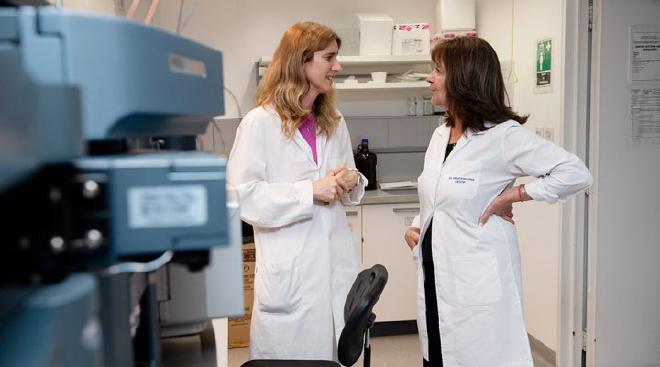
The equipment used for this project is installed in the Translational Medicine Unit (UMT) of the Gutiérrez Children’s Hospital. The CEDIE staff who participated in this project under the direction of Ropelato, an expert in pediatric endocrinology, were responsible for taking the first steps for the development, as well as the selection of the clinical material that was used for the validation of the technique. The articulation with the team led by Monge, an international leader in mass spectrometry and metabolomics, ended up shaping the project and ensuring scientific rigor so that the new methodology could be validated according to international standards and transferred to the clinic.
The first authors of the study were the CONICET researcher at the Faculty of Pharmacy and Biochemistry of the UBA, Manuela Martinefski, who did her postdoctoral work under Monge’s direction at CIBION, and the main professional of the CONICET Support Staff career Verónica Ambao (CEDIE). Also participating in the study were: CONICET researcher Rodolfo Rey (CEDIE), María Gabriela Ballerini (independent researcher at the GCBA) and María Eugenia Rodríguez, both from the Endocrinology Division on the Gutiérrez Hospital.
Citation #
- The study Quantification of eight clinically relevant serum adrenal steroids in infants by UHPLC-APCI-MS/MS was published on the Journal of Mass Spectrometry and Advances in the Clinical Lab. Authors: Manuela R. Martinefski, Verónica Ambao, María Gabriela Ballerini, María Eugenia Rodríguez, Rodolfo A. Rey, María Eugenia Monge & María Gabriela Ropelato.
Contact [Notaspampeanas](mailto: notaspampeanas@gmail.com)