


  1. Posts/

AI offers ‘roadmap’ to plant genetics

·4 mins·
Notaspampeanas
Gene Duplication Plant Gene Expression Plant Genes Plant Genomes Genomics Genome Diversity Plant Evolution Artificial Intelligence Cold Spring Harbor Laboratory
Notaspampeanas
Author
Notaspampeanas
Digging on curiosity and science.
Table of Contents

As global temperatures rise, Cold Spring Harbor Laboratory (CSHL) scientists work to grow stronger, more resilient crops. Yet, this process is challenging. Plants often have several related genes that control desirable traits, such as size or drought resistance. Finding genes with overlapping functions, or “redundant genes,” is a near-impossible scavenger hunt.

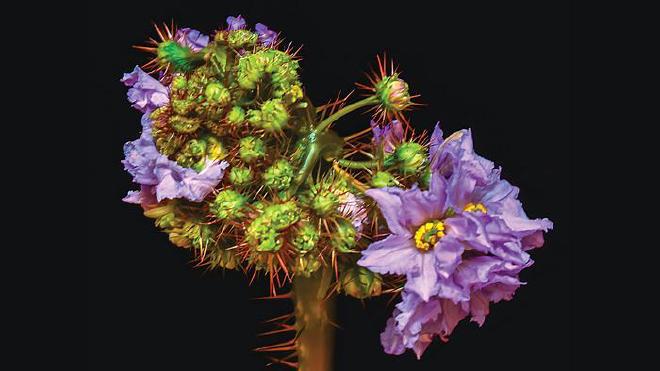
Severely abnormal plant growth caused by mutations in the CLV3 duplicate gene CSHL postdoc Iacopo Gentile has devised a new system for identifying redundant genes and predicting how certain genetic mutations may affect plant triats. The model provides plant breeders with a potential roadmap for future crop improvements. Image credit: Lippman lab/CSHL

“Most of the time, there are major limitations in the pathway to crop improvement,” said Iacopo Gentile, a postdoc in CSHL’s Zachary Lippman lab. “That’s because there’s so much redundancy and complexity in how gene families evolve and compensate for each other.”

Now, Gentile and colleagues have traced one important gene family in flowering plants to see how it’s changed over 140 million years of evolution. Using this data, they trained models to identify patterns of redundancy and predict which genes to edit for modifying specific traits.

“It’s about understanding what happens after gene duplication,” Gentile explained. “You have one gene that duplicates. Then you have two. What happens after that? Theory tells you they will diverge from each other. The big question mark in the field is how.”

To answer this question, the team homed in on CLE, a gene family involved in cell signaling and plant development. CLE peptides are prevalent across all plant species. However, much about their specific functions remains unknown. Studying them has been difficult due to their short length, rapid evolution, and redundancy.
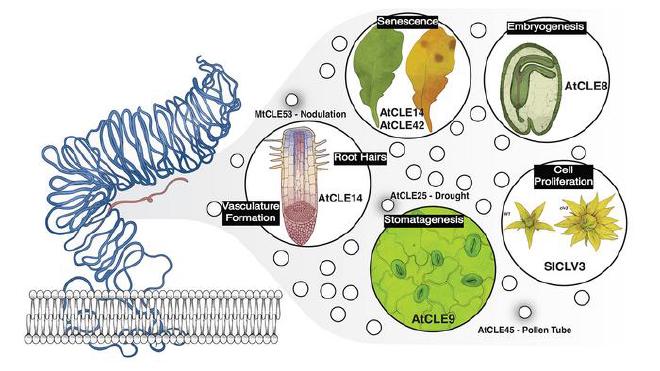
This graphic illustrates some of the many biological processes in which CLE peptides are involved. Image credit: Lippman lab/CSHL

Using new advances in AI, the team identified thousands of previously unknown CLE genes across 1,000 species. They fed this data into computer models, which flagged genes that might be redundant. Redundant genes likely share similarities in one or two places—the peptides they produce, or gene promoters, the areas of DNA that control expression.

To confirm the models’ predictions, the Lippman lab knocked out the flagged genes in tomatoes, using CRISPR. As suspected, eliminating just one redundancy had no effect. However, knocking them all out produced visible changes in the plants.

Zachary Lippman. Professor & HHMI Investigator. Jacob Goldfield Professor of Genetics. Director of Graduate Studies. Ph.D., Watson School of Biological Sciences at Cold Spring Harbor Laboratory, 2004

“It’s the first time in tomatoes where you have such big targeting of so many genes at the same time,” Gentile said. “We targeted 10.”

Notably, the team discovered that most redundant genes had similar promoters even if peptide sequences differed. The model not only identified possible redundancies—it also predicted whether specific CLE mutations would have positive, negative, or neutral effects on plants.

Gentile said the method they developed could “easily be scaled to every gene family,” not just CLE. As a result, plant breeders now have a “roadmap” to predict how hidden genes could be used to their advantage.

Citation
#

  • The study Pan-Angiosperm Analysis of the CLE Signaling Peptide Gene Family Unveils Paths, Patterns, and Predictions of Paralog Diversification was published on **Molecular Biology and Evolution**. Authors: Iacopo Gentile, Miguel Santo Domingo, Sophia G Zebell, Blaine Fitzgerald & Zachary B Lippman.

Acknowledgments
#

The authors would like to thank members of the Lippman laboratory for their support and feedback and T. Mulligan, K. Schlecht, and S. Qiao for their assistance with plant care.

Funding
#

Z.B.L. is supported by the National Science Foundation program grants IOS-2129189 and IOS-2216612 and the Howard Hughes Medical Institute.

Conflict of Interest
#

Z.B.L. is a consultant for and a member of the Scientific Strategy Board of Inari Agriculture.


Contact [Notaspampeanas](mailto: notaspampeanas@gmail.com)


Related

Theia and Earth Were Neighbors
·6 mins
Notaspampeanas
Planetary Science Geochemistry
Why some volcanoes don’t explode
·5 mins
Notaspampeanas
Volcanoes ETH Zurich
Pampean Cultural Agenda: November closes with a diversity of proposals
·7 mins
Notaspampeanas
La Pampa Cultural Agenda
La Pampa: Comprehensive activities to raise awareness about Diabetes
·4 mins
Notaspampeanas
La Pampa World Diabetes Day
MIT researchers found 80% of ransomware attacks now use artificial intelligence
·4 mins
Notaspampeanas
Artificial Intelligence Cybersecurity MIT Sloan Ransomware Attacks
September is Healthy Aging Month
·3 mins
Notaspampeanas
September Healthy Aging Month National Institutes of Health